
Telegram marketing uses channels, groups, bots, Telegram Business features, Mini Apps and paid advertising to attract audiences, communicate with customers and support conversion or retention.
But successful Telegram marketing is not simply about opening a channel and publishing promotions. The platform needs a defined role in the customer journey. For one business, that role may be distributing time-sensitive updates. For another, it may be building a specialist community, qualifying leads through a bot or maintaining customer communication after a sale.
This guide explains how Telegram’s main marketing tools work, how to build and grow a useful Telegram presence, where paid advertising fits, and how to measure whether the platform is contributing to business outcomes.
What Is Telegram Marketing?
Telegram marketing is the use of Telegram’s communication, community, automation and advertising features to support marketing and customer relationships.
It is broader than Telegram advertising alone.
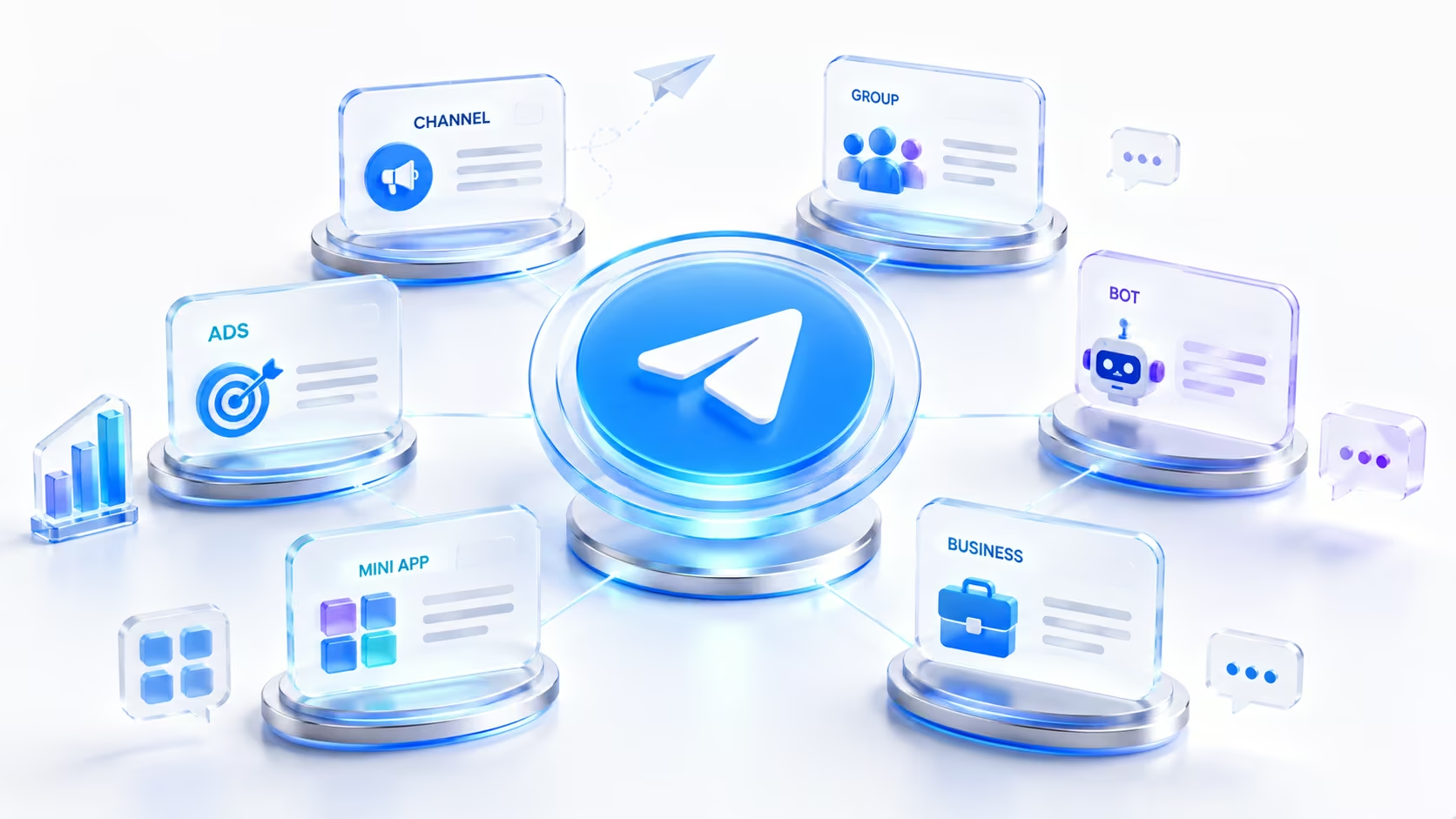
A company may use a Telegram Channel to distribute updates, a Telegram Group to host conversations, a Telegram Bot to automate specific interactions, Telegram Business features to manage customer communication, or Telegram Ads to reach people beyond its existing audience. Businesses with more complex requirements can also build Mini Apps that provide interactive experiences inside Telegram.
These tools solve different problems. Channels are suited to controlled one-to-many publishing. Groups are designed for conversation. Bots can handle structured workflows. Telegram Business supports direct customer communication, while paid advertising can help a business acquire new Telegram users.
The strategic question is therefore not simply, “Should we use Telegram?”
It is: what role should Telegram play within the wider customer journey?
How Telegram Marketing Works
Telegram gives businesses several ways to communicate with users, but not every company needs every feature.
A retailer that mainly wants to send restock alerts may only need a channel. A software company building a user community could benefit from a group. A service business receiving repeated enquiries may find more value in Telegram Business features and a bot.
Choosing the right setup starts with understanding what each tool is designed to do.
Telegram Channels
Telegram Channels are primarily designed for broadcasting messages to an audience. Businesses can use them to publish announcements, educational content, product updates, market information, event notifications, offers or customer updates.
From a marketing perspective, the main advantage of a channel is control over distribution. The business determines what is published and subscribers receive those updates within Telegram rather than participating in an open conversation.
A channel can also become part of a broader acquisition funnel. Someone may discover the business through search, social media, advertising, email or another website, join its Telegram channel and continue interacting with the brand before eventually visiting a product page, speaking with the company or making a purchase.
Public channels can be discovered through Telegram, while private channels require an invitation or invite link. Channel posts also provide view counts that help administrators understand how widely individual posts are being consumed.
Telegram Groups
Groups are better suited to situations where interaction between members contributes to the value of the experience.
A software company might create a customer community where users exchange ideas. An education provider could host discussions around a course. A specialist business might create a community around a professional subject where members can ask questions and learn from one another.
This makes groups useful for engagement and retention, but they also create operational responsibilities.
An active community needs moderation. Businesses need to decide who will manage questions, enforce participation rules, respond to spam and prevent the group from becoming noisy enough that useful conversations disappear.
The decision between a channel and a group should therefore be based on the communication model. If people mainly need information from the business, a channel may be sufficient. If interaction between members matters, a group becomes more relevant.
Telegram Bots
Telegram Bots are automated accounts that can interact with users and connect Telegram to structured workflows or external systems.
A bot might answer frequently asked questions, collect initial enquiry information, help users choose between services, deliver specific content or direct someone toward an appropriate next step. Telegram’s bot platform can also connect with Mini Apps and support more advanced interactions.
The most useful way to approach bots in marketing is to start with the repeated customer task rather than the technology.
If every prospective customer is asked the same five qualification questions before speaking with a salesperson, part of that interaction may be suitable for a bot. If customers repeatedly request the same information, automation may reduce unnecessary friction.
Bots become less useful when the conversation requires judgement, reassurance or a nuanced commercial discussion. Businesses should therefore create a clear route from automated interactions to a person when human involvement is needed.
Telegram Business
Telegram Business adds features designed specifically for business communication, including business hours, location information, quick replies, greeting messages, away messages and chatbot connections.
Their marketing value is not simply the presence of additional settings. They can reduce friction in customer conversations.
A restaurant can display opening hours and its location before a customer needs to ask. A service company can prepare quick replies for questions about appointments, pricing processes or required information. Greeting messages can establish what a new contact should expect, while away messages can explain when someone will receive a response outside staffed hours.
Connected bots can also handle parts of the interaction, but businesses should define where automation stops and human communication begins.
For companies using Telegram as a customer-contact channel rather than only a publishing platform, these features can make the experience more organised and predictable.
Telegram Ads
Telegram also operates its own advertising platform.
Telegram Ads allows advertisers to create Sponsored Messages that appear in eligible public one-to-many channels. Telegram’s current documentation states that the platform supports channels with at least 1,000 subscribers and uses a CPM buying model. Links in Sponsored Messages must currently lead to a Telegram channel or bot rather than an external website.
That makes Telegram Ads primarily an acquisition mechanism inside the Telegram ecosystem.
The ad itself is only the beginning of the journey. If a sponsored message sends someone to an inactive channel, an unclear bot or a destination with no obvious reason to continue, paid acquisition will have limited value.
Businesses planning paid campaigns should therefore design the destination and post-click journey before spending budget.
For a deeper look at paid campaign execution, see HDM’s guide to creating compelling Telegram Ads.
Mini Apps
Telegram Mini Apps allow developers to build interactive web-based interfaces that open directly inside Telegram.
They are relevant when a simple conversation with a bot is not enough. A business could use a Mini App to create a product selector, booking experience, account interface or another interactive workflow without immediately sending the user outside Telegram.
That does not mean every Telegram strategy needs one.
For many SMEs, a channel, Telegram Business account and relatively simple bot may address the immediate business requirement without the development work associated with a custom application.
Mini Apps make the most sense when there is a clear user experience that genuinely benefits from an interactive interface inside Telegram.
Telegram Channels vs Groups vs Bots: Which Should You Use?
The right Telegram setup depends on what users need to do after they arrive.
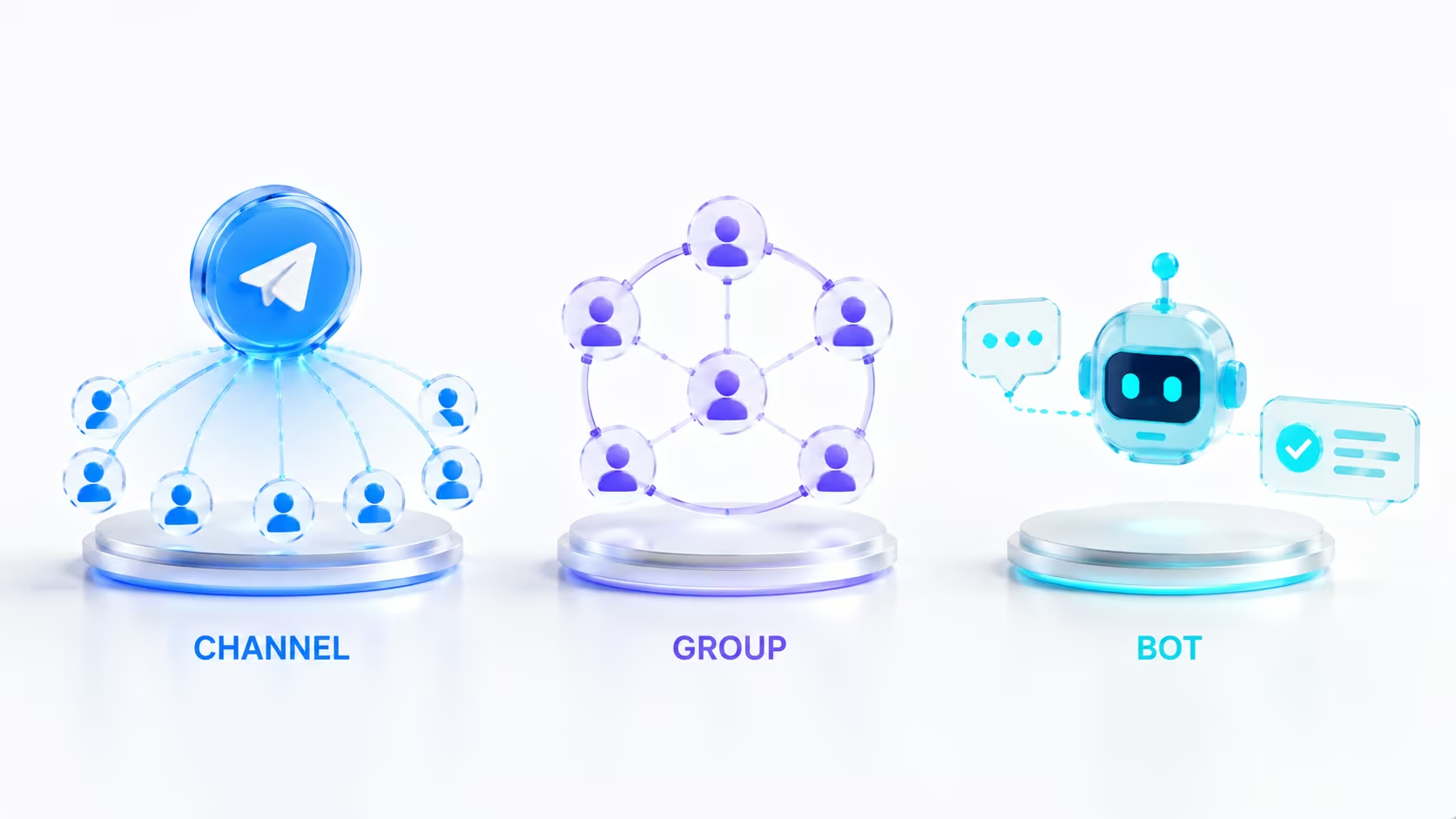
| Tool | Best for | Communication model | Marketing role | Automation potential | Best funnel stage |
| Channel | Updates, content distribution, announcements and offers | Primarily one-to-many | Audience nurturing and repeated communication | Medium | Join, Engage, Retain |
| Group | Communities, discussions, Q&A and member interaction | Many-to-many | Community building and participation | Medium | Engage, Retain |
| Bot | Repeated workflows, qualification and routing | Automated one-to-one interaction | Qualification and conversion support | High | Qualify, Convert, Retain |
| Telegram Business | Direct customer conversations | One-to-one | Customer communication and response management | Medium to high | Qualify, Convert, Retain |
| Telegram Ads | Reaching audiences outside the existing subscriber base | Paid promotion | Discovery and acquisition | Campaign-based | Discovery, Join |
| Mini App | Interactive workflows requiring a richer interface | Interactive | Utility, transactions and advanced experiences | High | Qualify, Convert, Retain |
Many businesses will use more than one.
A company might publish through a channel, use a bot to collect initial requirements and move qualified enquiries into a direct conversation. Another may combine a channel with a group so official announcements remain separate from community discussion.
The important point is that every component should have a defined role. Adding more Telegram features does not automatically create a better marketing system.
Benefits and Limitations of Telegram Marketing
Telegram can be particularly useful when a business benefits from repeat communication.
Instead of relying entirely on users rediscovering the company through search or a social feed, a channel gives subscribers a persistent place to receive future updates. Groups can add community interaction, while bots can reduce friction around repeatable processes.
That combination can make Telegram relevant to audience nurturing, customer communication, community building and retention.
It also has limitations.
Telegram should not be treated as a replacement for every discovery platform. Public channels can be found through Telegram, and the platform offers paid advertising, but businesses will often need external sources such as their website, social channels, email audience, partnerships or advertising to build an initial subscriber base.
Measurement can also become complicated when the customer journey moves between Telegram, a bot, a website, direct messages, phone calls and offline sales. Without appropriate tracking, a business may know that people are viewing posts without knowing whether those interactions contribute to commercial results.
Groups add another challenge. Communities require moderation, especially as they grow. If there is nobody responsible for managing spam, discussions and member behaviour, the quality of the group can deteriorate.
Poor execution can create trust problems as well. Excessive promotional messages, purchased members, unsolicited outreach or aggressive automation may increase visible activity while reducing audience quality.
Telegram therefore works best when people have a clear reason to join and a continuing reason to stay.
A Note on Telegram Privacy and Encryption
Telegram’s privacy and security should be described accurately rather than used as a broad promotional claim.
Telegram states that Secret Chats use end-to-end encryption. Regular Cloud Chats use client-server/server-client encryption and are stored encrypted in Telegram’s cloud. This allows cloud conversations to remain available across a user’s devices.
Businesses should therefore avoid claiming that all Telegram chats are end-to-end encrypted.
How to Build a Telegram Marketing Strategy
A useful Telegram strategy begins before the channel, group or bot is created.
The first decision is what behaviour the business wants Telegram to influence.
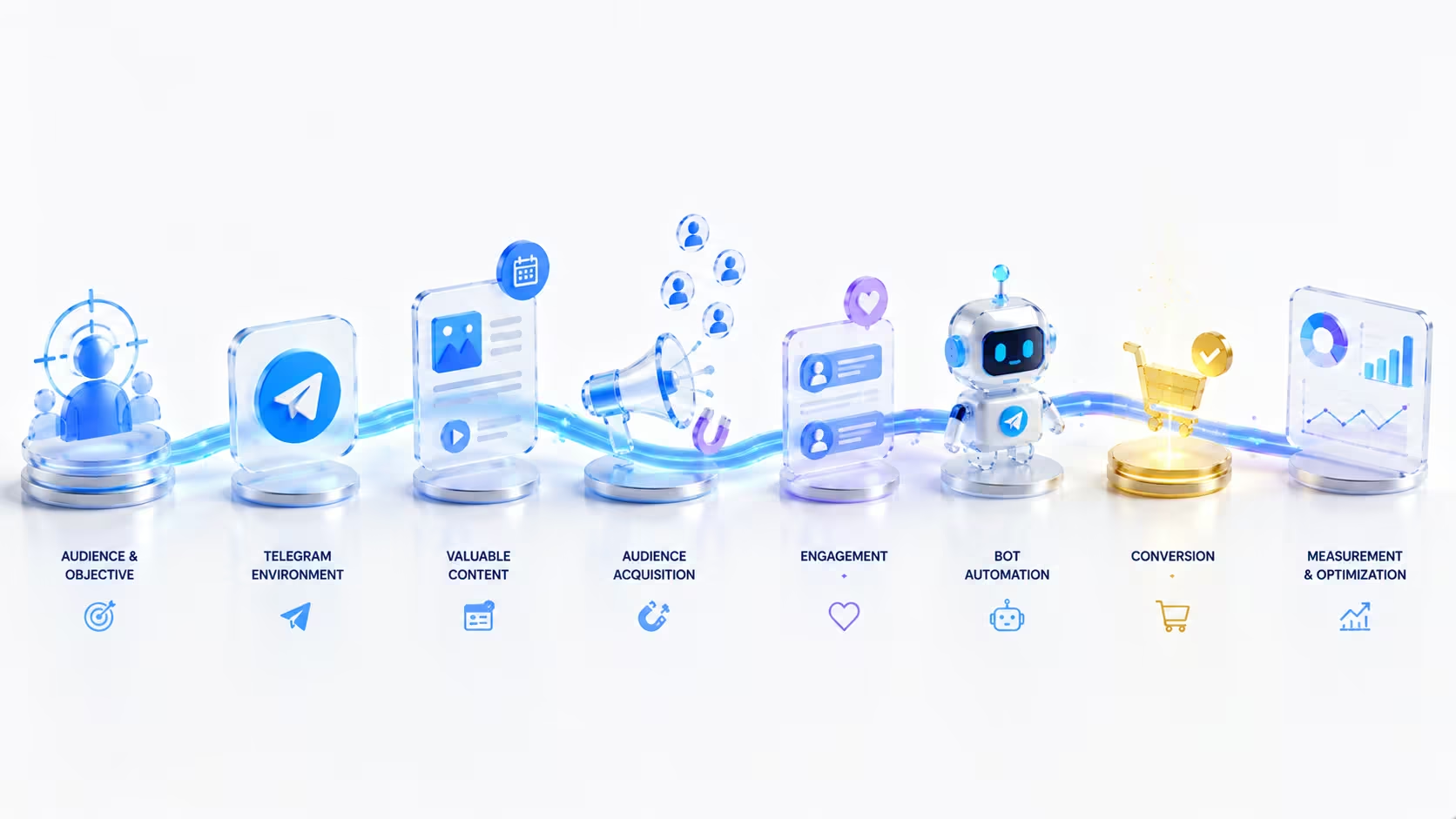
1. Define the Audience and Business Objective
“Grow our Telegram channel” is not a useful business objective by itself.
A stronger objective would be:
“Give existing customers a faster way to receive restock notifications.”
Or:
“Create an ongoing community for users of our software.”
Or:
“Use paid Telegram traffic to generate qualified enquiries for a service.”
Each objective suggests a different setup, content strategy and measurement model.
Start by defining who should use the Telegram presence, why they would join and what action the business ultimately wants to support.
2. Choose a Channel, Group or Hybrid Setup
Match the structure to the communication requirement.
Choose a channel when the primary need is controlled publishing.
Choose a group when member interaction creates useful value.
Combine the two when the business needs both official communication and community participation.
Introduce a bot only when there is a specific workflow that benefits from automation.
This avoids building a Telegram ecosystem that is more complicated than the customer journey requires.
3. Define the Content Value Proposition
People need a reason to add another source of messages to their Telegram account.
“Useful content” is too vague to guide a strategy. Define exactly what people will receive.
For an ecommerce business, that might be early restock alerts and product availability updates. For a B2B company, it could be concise market analysis, useful templates or invitations to specialist sessions. A property business might publish selected listings for a specific buyer segment rather than duplicating everything already posted on Instagram.
The channel should be able to answer one simple question:
What will subscribers consistently receive here that makes staying subscribed worthwhile?
The answer should shape the editorial strategy.
If developing that content consistently is a challenge, HDM’s content creation services cover content strategy and production across digital marketing channels.
4. Build an Audience Acquisition Strategy
Creating a channel does not create an audience.
Businesses need to identify where qualified subscribers will come from.
A website is one source, but simply adding a Telegram icon to the footer gives visitors little reason to click. A stronger approach is to promote Telegram where the benefit is relevant.
An ecommerce product page might invite users to join for restock notifications. An email to existing customers could offer access to customer-specific updates. Social media could direct followers toward deeper specialist content that is only distributed through Telegram.
Partnerships and cross-promotion can also work when the audiences are genuinely aligned. Official Telegram Ads provide a paid route to acquisition, while referral mechanisms can help when existing members have a real reason to recommend the channel.
HDM’s guide to promoting a business through Telegram channels covers channel-growth methods in more detail.
The objective should be qualified subscribers, not the highest visible member count.
5. Create Engagement Loops
Getting someone to join is only the beginning.
A useful Telegram presence gives people reasons to keep opening it and interacting with the business.
That does not require constant posting.
A B2B channel might publish one useful weekly analysis and ask subscribers to submit questions that influence the following week’s topic. An ecommerce company may use recurring product drops or restock alerts. A specialist community could use polls to identify which questions members want discussed next.
A simple engagement loop looks like this:
Useful information → action → feedback or additional value → reason to return
The content itself should naturally create the next interaction.
6. Use Bots and Automation Where Appropriate
Before building a bot, map the repeated interactions your team already handles.
If employees regularly answer the same pre-sales questions, collect the same lead information or send people to the same resources, parts of that process may be suitable for automation.
For example, a bot could ask which service a prospect is interested in, collect initial requirements and direct that person toward the relevant resource or team member.
The goal is not to automate as much as possible.
It is to remove unnecessary friction while keeping human involvement available when the conversation becomes complex.
7. Create a Conversion Path
Subscribers are not automatically customers.
Telegram needs a logical route from attention to the next business action.
Depending on the business, the path may look like:
Channel → product page
Channel → bot → qualified enquiry
Group → consultation request
Telegram Business chat → appointment
Channel → event registration
Bot → Mini App or customer account
The conversion path should feel connected to the reason the person originally joined.
Someone who subscribes for useful industry analysis should not immediately encounter unrelated hard-selling messages. The commercial next step should make sense in context.
8. Measure and Improve Performance
Measurement should connect Telegram activity to the original business objective.
Subscriber growth tells you whether the audience is expanding. Post views help indicate whether people are consuming the content. Clicks show whether the content creates action.
But businesses should also ask what happens after those clicks.
Use UTM parameters or another consistent tagging structure on outbound links so Telegram traffic can be identified within Google Analytics 4 or another analytics platform. Where possible, connect Telegram-originated traffic with lead, ecommerce or CRM data.
HDM’s web analytics and conversion tracking services focus on creating this connection between marketing activity and measurable business outcomes.
Without appropriate attribution, it is easy to optimise for activity rather than results.
The HDM Telegram Marketing Funnel
A practical way to plan Telegram activity is to divide the customer journey into six connected stages:
Discovery → Join → Engage → Qualify → Convert → Retain
The HDM Telegram Marketing Funnel is a planning framework rather than an academically validated model. Its purpose is to help businesses avoid treating subscriber acquisition as the final objective.
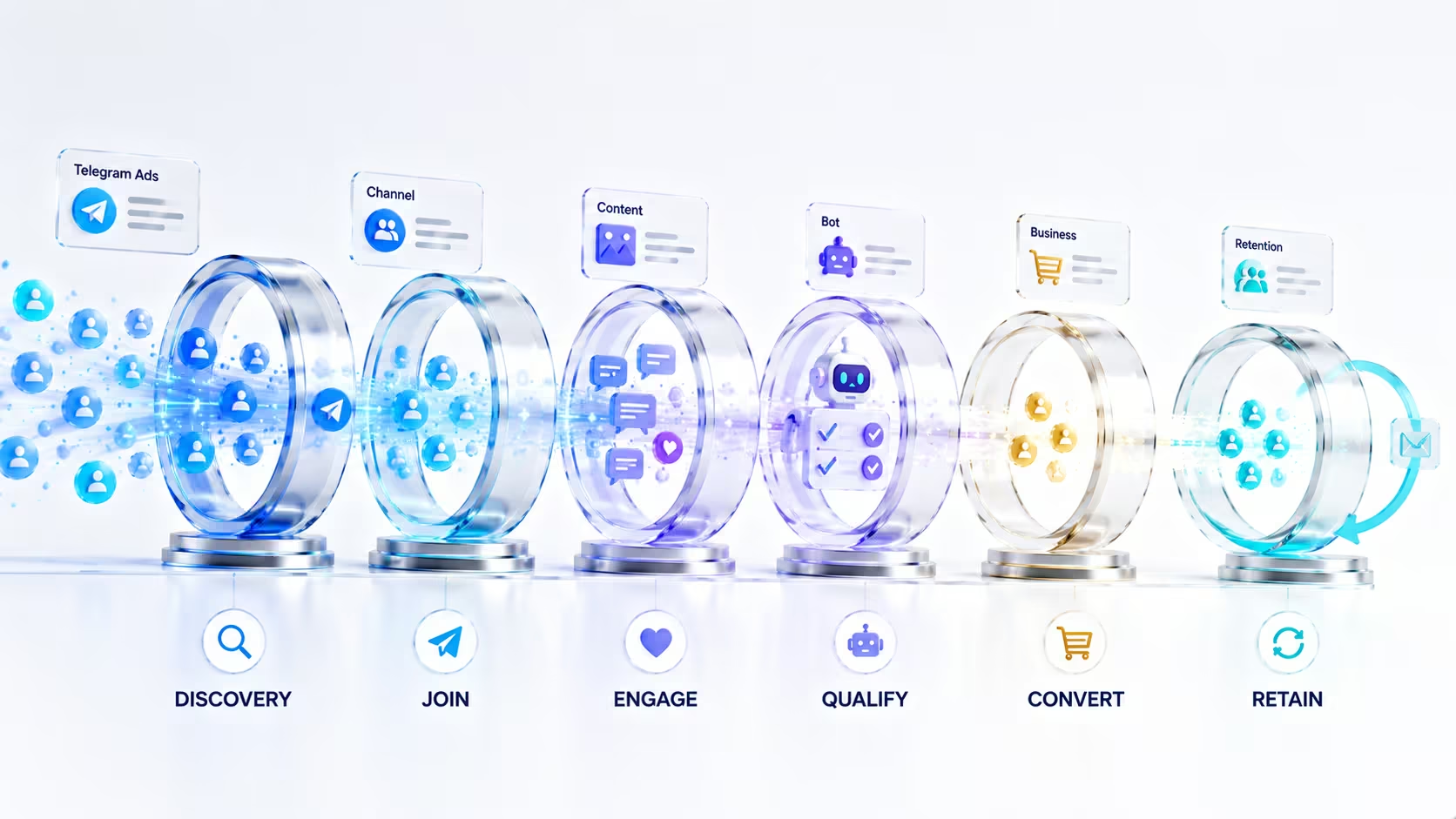
| Funnel stage | Objective | Telegram feature or tool | Example action | Primary KPI |
| Discovery | Reach relevant non-subscribers | Telegram Ads, website, email, social media, partner channels | Promote a relevant Telegram resource to a suitable audience | Qualified acquisition traffic |
| Join | Turn interest into a subscription or conversation | Channel, group, bot, chat link | Give users a specific reason to join | Join rate / subscriber growth |
| Engage | Encourage continued consumption or participation | Posts, polls, discussions | Publish recurring useful content and invite interaction | Views / meaningful interactions |
| Qualify | Understand customer intent or needs | Bot, Business chat, website | Ask relevant questions or route the user appropriately | Qualified leads |
| Convert | Move qualified users toward the intended business action | Bot, website, direct conversation, Mini App | Request a quote, book, register or purchase | Conversions / conversion rate |
| Retain | Maintain useful communication after conversion | Channel, Business messaging, group, bot | Provide customer updates, resources or continued support | Repeat interaction / retention-related conversions |
A common mistake is concentrating most of the marketing effort on Discovery and Join.
A company may spend heavily to increase subscribers while giving little attention to what happens afterwards.
That can produce impressive member counts without creating qualified conversations, conversions or repeat customer activity.
The Engage, Qualify and Convert stages should therefore be designed before significant acquisition spending begins.
How to Grow a Telegram Channel
Sustainable channel growth usually comes from connecting Telegram with audiences the business already reaches or can acquire intentionally.
Your website is one starting point. But the invitation should explain why a visitor should join rather than simply displaying a Telegram logo.
Existing customers can also be valuable subscribers when Telegram provides a useful post-purchase function, such as alerts, customer information or access to relevant resources.
Email and social audiences can be cross-promoted when Telegram offers something distinct from the channel the user is already following.
For example, an Instagram follower is unlikely to join Telegram merely to see exactly the same posts again. They may join if Telegram provides faster alerts, deeper specialist updates, customer-only information or another clear benefit.
Relevant partnerships can introduce the channel to audiences that already have an interest in the topic. Paid Telegram Ads can support acquisition at greater scale when the economics make sense.
Subscriber quality matters more than the visible member count.
A channel with a smaller audience that regularly reads, clicks, enquires and purchases may be more commercially useful than one with tens of thousands of low-quality or inactive members.
Purchased members, fake accounts, unsolicited mass messaging and manipulative growth tactics undermine this process. They distort measurement and make it harder to understand how many genuine prospects are actually paying attention.
If channel acquisition itself is the priority, read the dedicated guide on how to promote your business on Telegram channels.
Telegram Ads: How Paid Promotion Works
Telegram Ads can help a business reach people beyond its existing audience, but paid promotion should not begin with the ad itself.
The first question is where the user will go after clicking.
Telegram’s current Ad Platform documentation requires Sponsored Message links to point to a Telegram channel or bot. That destination therefore needs to be ready before the campaign starts.
An inactive channel with several old promotional posts gives a newly acquired visitor little reason to subscribe. A bot with an unclear opening interaction creates the same problem.
The destination needs a clear value proposition and an obvious next step.
The second question is what happens after the person joins.
If the campaign objective is simply “more members,” the business may succeed at acquisition without creating any meaningful downstream result. The paid journey should instead connect to the wider marketing funnel.
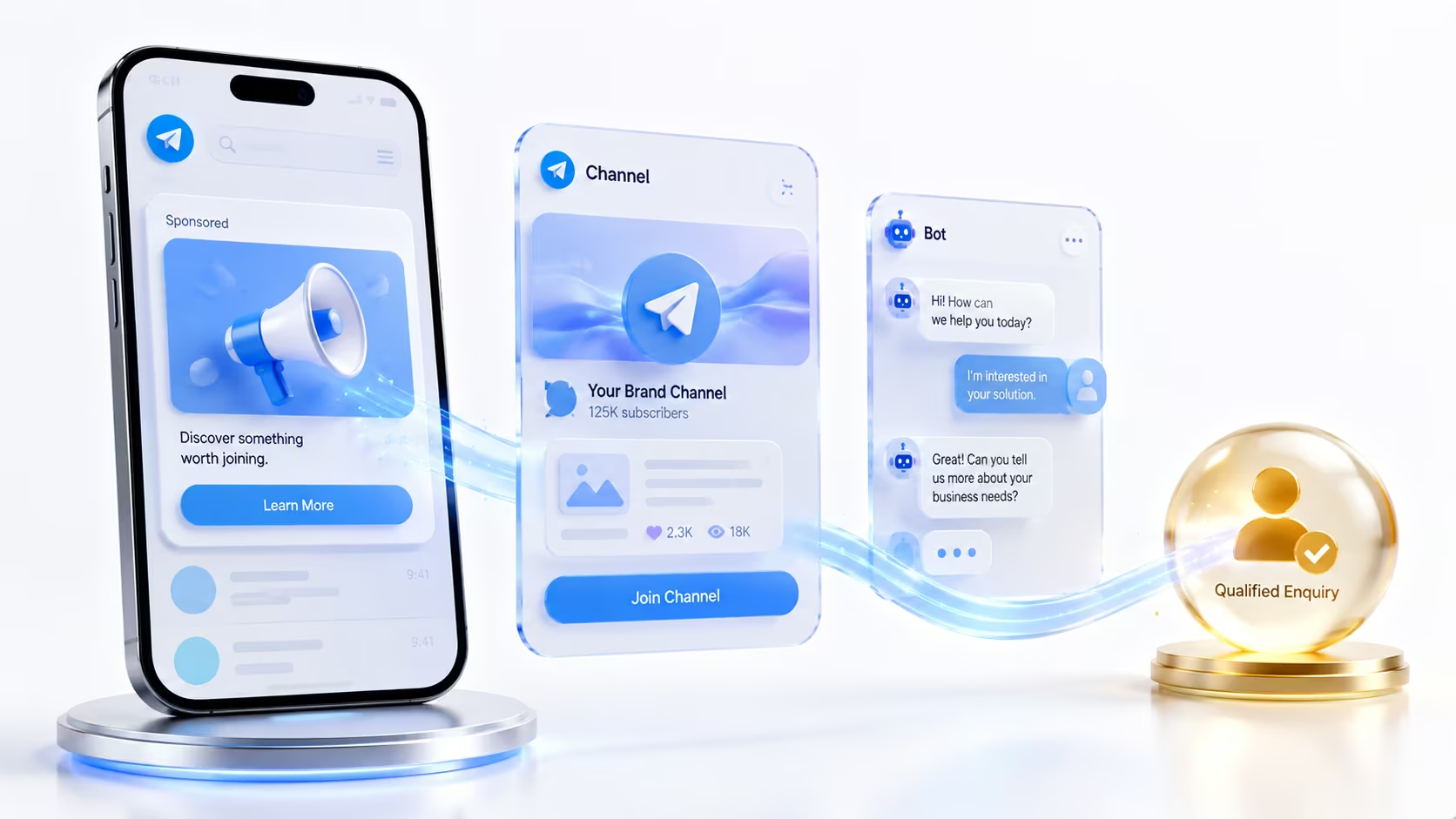
For example:
Sponsored Message → specialist channel → useful recurring content → bot → qualified enquiry
Or:
Sponsored Message → bot → needs assessment → relevant Telegram resource → sales conversation
The third question is measurement.
Telegram’s campaign metrics help assess paid activity within the advertising platform, but businesses also need to track what happens later if users move to a website, form, CRM process or another measurable conversion point.
Paid Telegram acquisition therefore works best when the destination, engagement strategy and conversion path have been designed before media spend begins.
For more tactical guidance on ad messaging, see how to create compelling Telegram Ads.
Telegram Business for Customer Communication
Telegram Business becomes particularly relevant when customers are expected to start direct conversations with the company.
Business hours and location information can answer basic questions before someone needs to send a message. Quick replies can make recurring responses more consistent. Greeting messages can introduce what happens when a new conversation begins, while away messages can set expectations outside staffed hours.
Consider a service company in Dubai that receives enquiries in the evening.
Instead of leaving the customer uncertain until the next working day, an away message can confirm that the enquiry has been received and explain when the team is available. A connected chatbot may collect the service category and a small amount of initial information.
When a team member continues the conversation, they already have useful context.
This can reduce repetitive work without removing the human interaction that often matters in service sales.
The distinction matters because automation should support the customer journey rather than become the customer journey.
Telegram Marketing KPIs: What Should You Measure?
The right Telegram metrics depend on the objective.
A retention channel should not be judged using exactly the same measures as a paid campaign intended to produce new leads.
| KPI | What it tells you | How to use it |
| Subscriber growth | Whether the Telegram audience is increasing | Compare growth by acquisition source where possible |
| Post reach/views | Whether subscribers consume the content | Compare different topics and publishing patterns over time |
| Engagement | Whether people actively interact | Track meaningful actions such as polls, comments or bot interactions |
| Link clicks | Whether Telegram content creates outbound action | Use tracked links for important calls to action |
| Click-through rate | Relationship between exposure and outbound action | Compare messages with similar objectives |
| Leads | Whether Telegram contributes to enquiries | Record source data in forms, bots or CRM systems |
| Conversion rate | Whether Telegram-originated traffic completes the desired action | Measure against a clearly defined conversion |
| Cost per subscriber | Paid cost of acquiring subscribers | Use for paid acquisition when the data is available |
| Cost per lead | Paid acquisition cost per attributable lead | Use when attribution is sufficiently reliable |
| Revenue or assisted conversions | Telegram’s potential commercial contribution | Connect Telegram traffic with analytics, CRM or ecommerce data |
There is no universal Telegram engagement benchmark that every business should aim to achieve.
Performance should be evaluated against the purpose of the channel, historical performance and the quality of the audience being acquired.
For website journeys, add appropriate UTM parameters to Telegram links. Organic channel traffic, partner promotion and paid acquisition should use distinguishable campaign tagging when the business needs to compare their downstream impact.
This allows Google Analytics or another analytics system to provide a clearer view of what Telegram users do after leaving the platform.

Telegram vs Instagram vs WhatsApp for Marketing
Telegram, Instagram and WhatsApp can all support marketing, but they solve different problems.
Instagram is usually the stronger discovery environment when a business depends heavily on public visual content, Reels, creator activity and algorithmic distribution. Brands that need to introduce themselves to new consumer audiences may therefore give Instagram a larger role near the beginning of the customer journey.
Telegram is more naturally suited to repeated content distribution, communities and structured automation. It can support discovery through public channels and Telegram Ads, but businesses often need to bring audiences into Telegram from other sources before its retention and communication strengths become relevant.
WhatsApp is particularly useful for direct customer conversations. For many service businesses, it may sit closer to qualification, sales or customer support rather than long-form content distribution.
The platforms therefore do not need to compete for a single winner.
A Dubai business might use Instagram to reach new audiences, Telegram to distribute specialist updates and maintain a community, and WhatsApp for high-intent sales conversations.
Paid media can also sit outside this sequence. Depending on the business and audience, channels such as Google Ads may capture people already searching for a product or service, while Telegram supports communication later in the journey.
The right channel mix depends on where the audience already spends time and what the business needs users to do at each stage.
Practical Telegram Marketing Example
Illustrative Example
Consider a Dubai-based professional training company offering specialist courses.
This is an illustrative scenario, not an HDM or client case study.
The company already receives potential students through search, paid advertising, its website and social media. Not every visitor is ready to register immediately, so the business creates a Telegram channel for course-date alerts, short educational updates and notifications when new sessions open.
A prospect discovers the company through an existing acquisition channel and joins Telegram because those updates are relevant.
Over the following weeks, the subscriber receives useful information about the subject and upcoming programmes. When registration opens, one channel post directs interested users to a Telegram bot.
The bot asks a small number of initial questions to understand which programme may be suitable. Users who require further information are then directed to the appropriate course page or a human advisor.
Outbound website links from Telegram use consistent tracking parameters so the company can distinguish those visits in its analytics.
After registration, Telegram may continue to support relevant reminders, schedule information or future programme updates.
The journey becomes:
Acquisition → Channel → Engagement → Bot or contact → Website or lead → Retention
The value does not come from the Telegram channel in isolation. It comes from connecting Telegram to the rest of the customer journey.
Common Telegram Marketing Mistakes
Several problems appear when businesses treat Telegram as a publishing task rather than a marketing system.
Buying Low-Quality or Fake Members
A high subscriber count may look impressive while making the underlying data less useful.
Fake or uninterested members distort channel-quality signals and make it difficult to understand how genuine users respond to the content.
A better approach is to evaluate acquisition sources according to the quality and behaviour of the subscribers they generate.
Broadcasting Only Promotional Messages
Subscribers rarely need another channel containing the same sales messages already available elsewhere.
If every post asks people to buy, enquire or register, there is little reason to remain subscribed between purchasing moments.
Give the channel a recurring utility first. Commercial messages can then appear when they are contextually relevant.
Having No Subscriber Acquisition Plan
Regular publishing does not automatically solve discovery.
Before launching, identify where the first qualified subscribers will come from and why those people should move from their existing platform or communication channel into Telegram.
Failing to Define the Role of a Channel and Group
Creating both without a clear reason can split the audience and increase management work.
Decide whether users primarily need information, conversation or both before choosing the structure.
Over-Automating Conversations
Bots are useful for predictable tasks.
They are less suitable when customers have unusual questions, objections or situations requiring judgement.
Provide an obvious way to reach a person when the automated flow is no longer sufficient.
Ignoring Moderation
A group without clear ownership can become noisy or vulnerable to spam.
Set participation rules and assign moderation responsibility before the community becomes difficult to manage.
Failing to Track Outbound Traffic
When links are not tagged, website visits and conversions may appear in analytics without enough information to connect them back to Telegram.
Use a consistent tracking structure for important outbound links.
Measuring Success Only by Member Count
Member count describes audience size, not business impact.
A more useful view combines audience growth with consumption, interactions, clicks, qualified enquiries, conversions and retention metrics appropriate to the objective.
Is Telegram Marketing Right for Your Business?
Telegram is more likely to be useful when a business benefits from repeated communication with the same audience.
That may include businesses where timely alerts matter, where a specialist community creates genuine value, where customers already use Telegram regularly or where automation can make customer communication easier.
It may also suit companies that produce information people have a recurring reason to receive: market updates, product availability, specialist content, programme announcements or customer resources.
Telegram deserves lower priority when the target audience rarely uses it, the business has no meaningful reason for repeat communication or broad public discovery is the immediate marketing problem.
For example, a visually driven consumer brand starting without an existing audience may reasonably prioritise Instagram before building a substantial Telegram presence.
A local service company whose customers already prefer WhatsApp may gain more from improving that customer journey before adding another messaging platform.
The decision should therefore begin with audience behaviour and business requirements rather than Telegram’s feature list.
A Practical Way to Think About Telegram in 2026
Telegram works best when businesses treat it as a direct communication, community, automation and retention channel rather than simply another social feed.
The starting point is not deciding whether to launch a channel, group or bot.
Start with the customer journey.
Identify who should join, what they should receive, why they should continue paying attention, what action Telegram should support and how that action will be measured.
Then choose the smallest combination of Telegram tools needed to make that journey work.
For businesses that need help connecting Telegram with paid acquisition, content and measurable customer journeys, HDM can support the wider strategy through content creation, paid advertising, web analytics and conversion tracking.
The objective is not simply to build a larger Telegram audience. It is to create a communication channel that has a defined role in how people discover, evaluate, choose and continue interacting with the business.
Telegram Marketing FAQs
Is Telegram marketing free?
Businesses can create and operate Telegram channels and groups without purchasing advertising. However, a Telegram marketing programme may still involve costs for content production, moderation, bot development, integrations, third-party promotion or Telegram Ads.
What is the difference between a Telegram channel and a group?
A Telegram Channel is primarily intended for broadcasting information to subscribers, while a Telegram Group is designed for discussion and interaction between members. Businesses commonly use channels for controlled content distribution and groups when community participation is part of the strategy.
How do businesses get subscribers on Telegram?
Businesses can acquire subscribers through their websites, email audiences, existing customers, social media, relevant partnerships, referral mechanisms and paid Telegram advertising. Growth is more sustainable when people are given a specific reason to join rather than simply being asked to “follow us on Telegram.”
Can you advertise on Telegram?
Yes. Telegram operates an official Ad Platform for Sponsored Messages. According to Telegram’s current documentation, these ads can appear in eligible public one-to-many channels and their links must currently lead to a Telegram channel or bot.
How do you measure Telegram marketing results?
Measurement depends on the business objective. Useful metrics can include subscriber growth, post views, engagement, outbound clicks, leads, conversion rate, cost per subscriber and attributable or assisted conversions. Tagged URLs can help connect Telegram traffic with website analytics.
Is Telegram suitable for small businesses?
It can be. A small business may benefit from Telegram when its customers use the platform and there is a useful reason for repeat communication. Company size is less important than audience behaviour and the role Telegram will play in the customer journey.
Is Telegram marketing better than WhatsApp or Instagram?
Not universally. Instagram is typically more focused on public content discovery, WhatsApp on direct customer communication and Telegram on combinations of broadcasting, communities and automation. Businesses may use more than one platform for different stages of the customer journey.
What are Telegram bots used for in marketing?
Telegram bots can automate structured interactions such as answering recurring questions, collecting information, qualifying enquiries, delivering content and routing users toward the next appropriate action. They can also connect with Mini Apps for more interactive experiences.