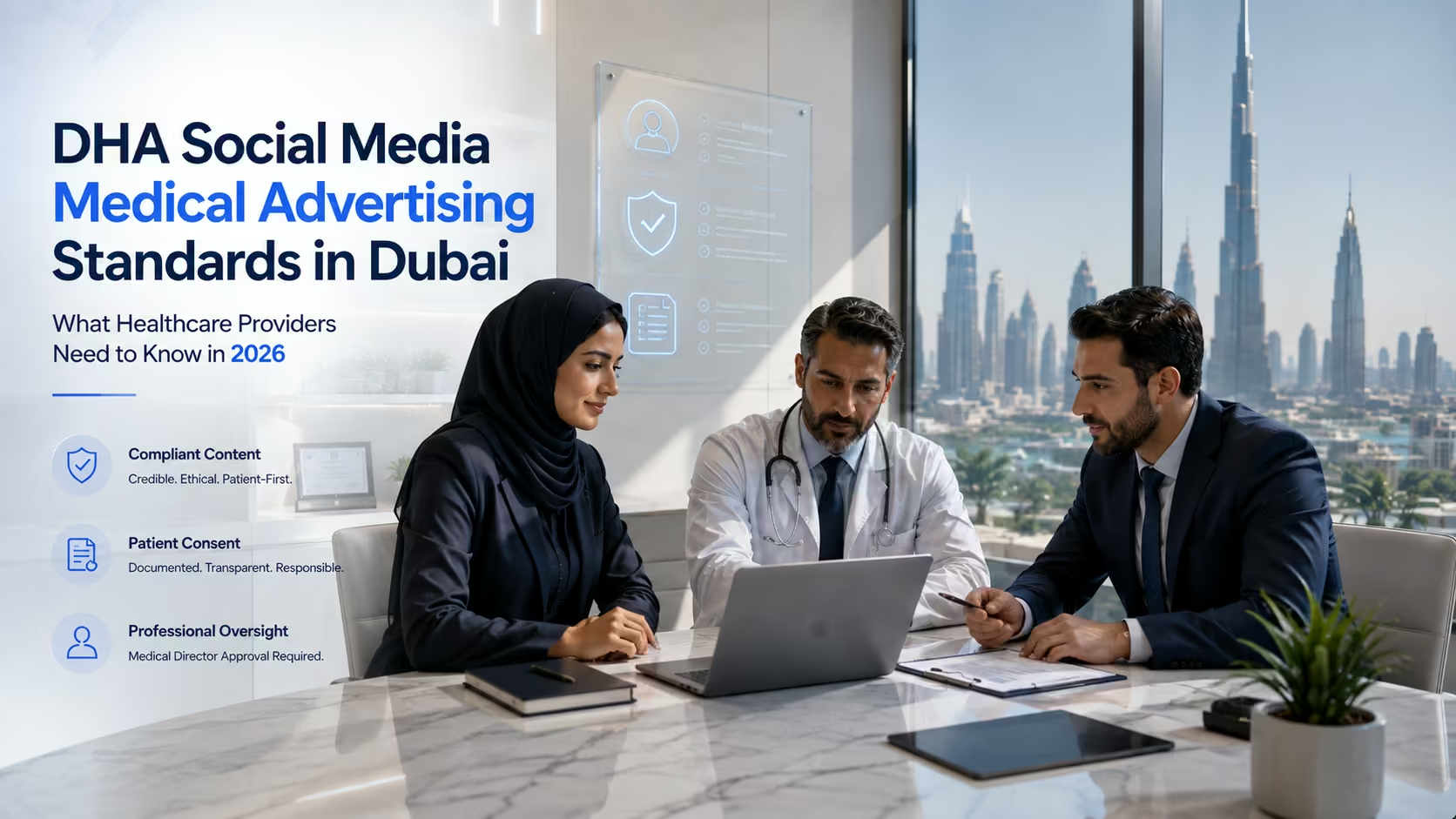
Dubai healthcare providers using Instagram, TikTok, YouTube, LinkedIn or other social platforms to promote medical services have review the update to the DHA medical advertising rules in 2026.
On 17 August 2026, the Dubai Health Authority (DHA) issued Circular CIR-2026-00000144, titled Standards for Medical Advertisement Content on Social Media. The circular is addressed to licensed healthcare facilities and healthcare professionals in Dubai’s private sector. DHA’s Health Regulation Sector states that the growth of healthcare promotion through social media creates a need to protect the credibility of medical advertising, support ethical communication and help patients make informed treatment decisions. The circular also states that failure to comply may lead to appropriate disciplinary action.
For hospitals, doctors, beauty clinics, and healthcare marketing teams, the practical question is not simply whether a post is persuasive or performs well. It is whether the content accurately represents the healthcare service, treatment, or professional being promoted and whether the relevant consent, compliance, and licensing requirements have been obtained before running the ads.
There is also an important chronology to understand. DHA had already issued Standards for Medical Advertisement Content on Social Media, Version 1.1, in 2022. So, healthcare and beauty clinics should not assume that every detailed requirement discussed below first appeared in August 2026.
What has DHA announced in August 2026?
DHA Circular CIR-2026-00000144 was published on 17 August 2026 and is directed to licensed private-sector healthcare facilities and healthcare professionals in Dubai.
In the circular, the DHA Health Regulation Sector refers to the increasing use of social media to advertise and promote healthcare services and emphasises the importance of credible medical advertising that is compatible with UAE traditions and conventions. DHA says the standards are intended to promote ethical social media advertising and provide patients with reliable information for informed treatment decisions. Healthcare facilities and professionals are expected to comply with the applicable terms and conditions, with non-compliance potentially leading to disciplinary action.
The circular should be read alongside DHA’s detailed regulatory material rather than interpreted as proof that every substantive advertising rule was created in August 2026.
What changed in August 2026 — and what was already in the DHA standard?
The distinction matters because the August 2026 circular and Version 1.1 of the Standards for Medical Advertisement Content on Social Media are not the same document.
| Requirement | Status | Practical meaning |
| DHA Circular CIR-2026-00000144 | Issued 17 August 2026 | DHA renewed regulatory attention on social media medical advertising and instructed licensed private healthcare facilities and professionals in Dubai to comply with the announced standards. |
| Standards for Medical Advertisement Content on Social Media, Version 1.1 | Existing detailed standard issued in 2022 | The published document contains detailed requirements covering social media accounts, advertising claims, Medical Director responsibilities, healthcare professional responsibilities and patient images or videos. |
| Absolute or exaggerated treatment claims | Already addressed in Version 1.1 | Terms such as “best,” “safest,” “only,” “100%,” “assured success” and “has no side effects” appear in the published 2022 standard as wording that must not be used. |
| Documented patient consent | Already addressed in Version 1.1 | DHA’s published standard requires documented consent for individuals or patients used in social media advertisements and written consent for patient pictures, images, videos and statements. |
| Medical Director oversight | Already addressed in Version 1.1 | The standard assigns Medical Directors responsibilities for advertising content and requires approval in specified situations involving a facility name or location. |
| Enforcement and compliance emphasis | Expressly reinforced in the August 2026 circular | The 2026 circular states that facilities and professionals are expected to adhere to the standards and that failure to comply can result in suitable disciplinary action. |
The practical takeaway is not that Dubai clinics suddenly received an entirely new set of social media rules in August 2026. The safer response is to treat the circular as a reason to review current social media activity against the applicable DHA requirements and confirm that older posts, newer formats and current approval processes remain appropriate.
Medical advertising covers more than paid ads
A healthcare organisation should not assume that “medical advertising” means only Meta Ads, sponsored posts or other paid media. Paid campaigns can also involve an additional layer of platform-specific advertising rules. For example, clinics using Google Ads need to consider Google’s healthcare advertising policies alongside the local regulatory requirements that apply in Dubai. Our guide to Google Ads for healthcare services explains the campaign, targeting and compliance considerations involved in promoting healthcare services through Google.
DHA Version 1.1 defines a Social Media Advertisement (SMA) as information about a health product, service, facility, professional, treatment or therapy communicated through social media. The standard references a range of social platforms, including Instagram, WhatsApp, YouTube, Snapchat and LinkedIn.
This means the relevant compliance questions may arise with organic posts, Reels, doctor-led videos, treatment explainers, patient stories, creator collaborations and other content that promotes healthcare services or outcomes.
The useful test is therefore what the content communicates and how it is connected to a healthcare service—not simply whether the clinic paid to distribute it.
Personal accounts are not automatically outside the DHA framework
The published DHA standard makes an important distinction between professional and personal social media activity.
It states that DHA-licensed healthcare professionals should use separate personal and professional accounts. Healthcare professionals promoting only their own service without using a healthcare facility’s name or location are responsible and accountable for social media advertising content on their professional account. The standard also states that healthcare professionals are accountable for the content and style of social media advertisements on their personal accounts.
That does not mean every personal post made by a doctor automatically becomes regulated medical advertising. The relevant distinction is whether the activity falls within the DHA framework for social media advertising or connects the individual to professional healthcare promotion.
The standard also requires Medical Directors to ensure healthcare professionals maintain separate professional and personal social media accounts and avoid interactions with current or former patients on personal accounts.
There are additional considerations for specialists who work internationally. Version 1.1 states that a visiting doctor or healthcare professional working in Dubai and other countries should maintain a separate social media account for Dubai healthcare services, and that material from patients treated elsewhere must comply with the DHA standards if it is used on the Dubai account. The standard separately states that visiting healthcare professionals should have a separate account for healthcare services provided in DHA healthcare facilities.
This is particularly relevant to visiting surgeons, internationally practising specialists and clinics promoting temporary or visiting practitioners in Dubai.
Treatment claims need evidence, not marketing language
One of the clearest risks in healthcare advertising is a claim that promises more than the underlying evidence can support.
DHA Version 1.1 states that social media advertisements must be substantiated, especially when they relate explicitly or implicitly to treatment outcomes, and says associated risks should be included. It also restricts absolute statements and exaggerated or alarming expressions. The examples listed by DHA include terms such as “best,” “safest,” “only,” “assured success,” “has no side effects,” “100%,” “absolutely certain” and “immediate results.”
That has a direct implication for healthcare copywriting. A statement such as “Guaranteed results with Dubai’s safest cosmetic treatment” combines several claims that DHA’s published standard specifically warns against.
A more responsible approach is to describe what a treatment is intended to address, provide appropriate context about suitability and avoid turning a possible clinical outcome into a certainty.
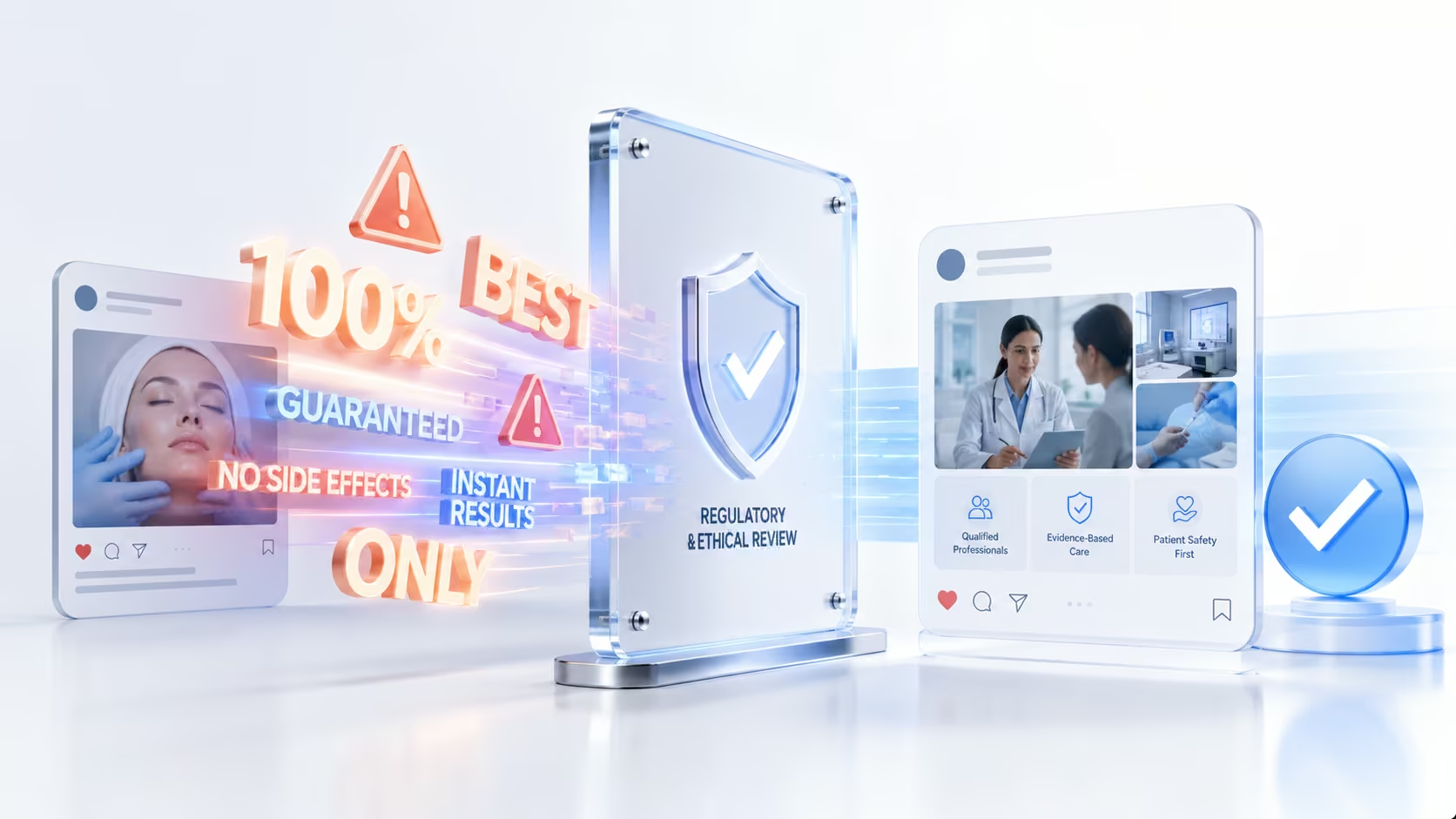
Examples of healthcare advertising language that may create compliance risk
These examples are illustrative. A revised sentence should not be treated as automatically compliant; the final assessment depends on the treatment, evidence, context, account, visuals and other applicable requirements.
| Higher-risk wording | Why it creates a problem | More responsible approach |
| “The safest cosmetic procedure in Dubai” | “Safest” is an absolute or comparative safety claim expressly identified in DHA’s published standard as problematic wording. | A more responsible approach would be to describe the procedure and relevant safety considerations without claiming absolute superiority. |
| “100% successful hair restoration” | DHA lists “100%” and assured success among prohibited absolute or exaggerated expressions, and treatment-outcome claims require substantiation. | A more responsible approach would be to explain that outcomes vary and depend on clinical suitability and individual factors. |
| “No side effects” | DHA specifically lists “has no side effects” among expressions that must not be used. | A more responsible approach would be to provide balanced information about relevant benefits, limitations and risks. |
| “Book now before this symptom becomes serious” | The standard prohibits inducing fear or concern about a person’s health to increase demand for a service or procedure. | A more responsible approach would be to explain when professional assessment may be appropriate without using fear as the conversion mechanism. |
| “Dubai’s best aesthetic doctor” | “Best” is an exaggerated superiority claim, while healthcare professionals must also use titles and specialties consistent with their DHA licence. | A more responsible approach would be to state the practitioner’s licensed title, qualifications and relevant scope of practice accurately. |
The goal is not to weaken every healthcare advertisement. It is to avoid converting clinical uncertainty into marketing certainty.
Fear-based healthcare marketing is another area of risk
Urgency is common in commercial advertising, but healthcare communication requires more care when urgency is created through anxiety about a person’s health.
DHA’s published standard says social media advertisements should not induce fear or concern regarding a patient’s health in order to increase demand for a product, procedure or service. It also addresses creating unnecessary need and exploiting patients’ vulnerability or lack of health-related knowledge.
For example, a screening advertisement that tells an audience an ordinary symptom may mean serious disease and urges immediate booking without appropriate clinical context could create a different regulatory risk from a balanced message explaining when medical assessment may be advisable.
This is especially relevant where the audience may already feel vulnerable or uncertain about treatment.
Patient testimonials and images require documented consent
Patient stories can be persuasive, but healthcare providers cannot manage them like ordinary consumer testimonials.
DHA Version 1.1 requires documented consent from an individual or patient used in a social media advertisement. The standard states that consent should be limited to the subject for which it was requested and should not extend beyond the period for which consent was granted.
For pictures, images, videos and patient statements, the standard expressly requires written consent to be obtained and documented. It also requires healthcare professionals to protect patient privacy and confidentiality and obtain informed consent before disclosing health-related information.
A verbal agreement therefore should not be treated as a substitute for the documented consent process required by the published standard.
For marketing teams, the practical issue is traceability. Before reusing patient material, the organisation should be able to determine what the patient consented to, what material was covered and whether the permitted subject and period remain applicable.
That becomes particularly important when an old testimonial or treatment image is repurposed from an organic Instagram post into a paid campaign, website page or creator collaboration.
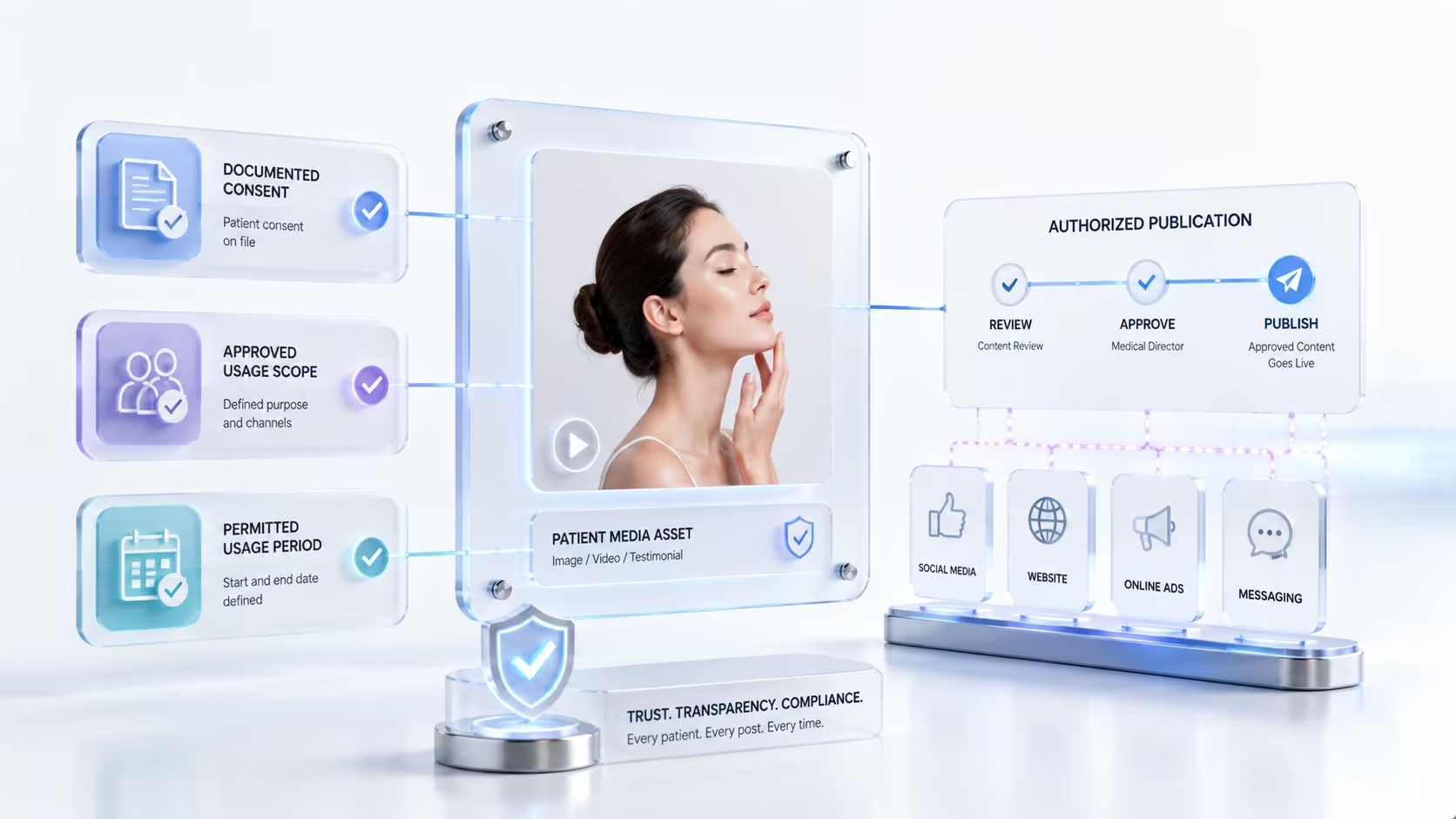
Before-and-after content needs particular care
Before-and-after images are widely used in aesthetic medicine, dentistry, dermatology, hair restoration and cosmetic surgery because they communicate outcomes quickly. They can also create unrealistic expectations if the presentation is not controlled.
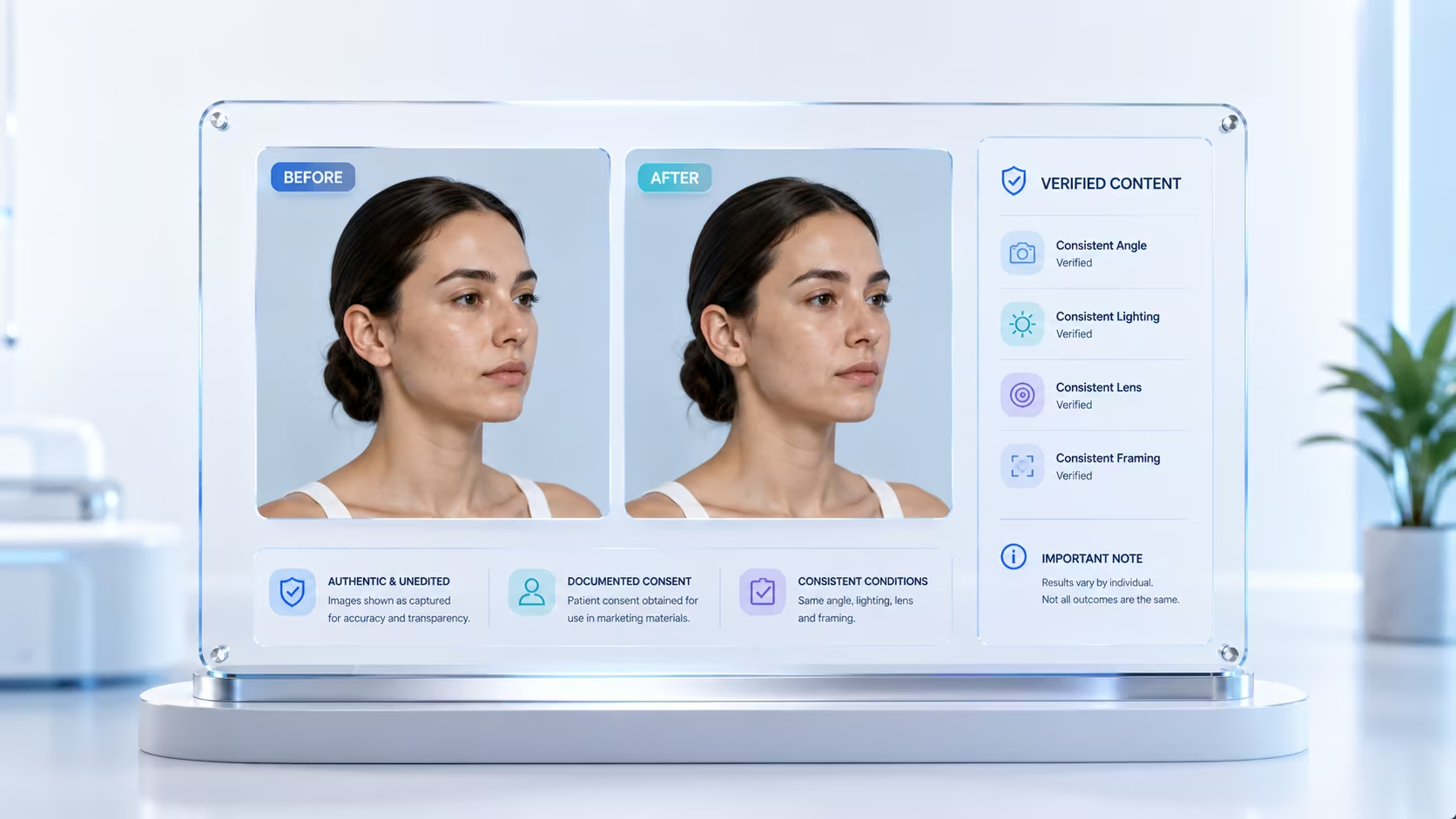
DHA Version 1.1 states that before-and-after pictures, images and videos should show the same individual, use the same lens, avoid Photoshop enhancements or equivalent software and include wording explaining that results are not guaranteed and may vary between individuals, together with the relevant risks. The standard also specifies that this information should appear in the same font size as the rest of the advertisement.
The prohibited-content appendix additionally addresses before-and-after visuals that do not disclose variability in treatment outcomes and states that the images must represent patients who actually received the treatment, service, health device or medicine being advertised.
The compliance question is therefore broader than whether the clinic has permission to use the photograph. Image authenticity, treatment relevance, presentation, accompanying information and patient consent all matter.
Filming procedures can create separate advertising risks
Healthcare providers should also distinguish before-and-after content from promotional filming during a procedure.
DHA Version 1.1 restricts video filming or live streaming for social media advertising while a patient is undergoing minor or major surgery under General Anaesthesia and in procedure rooms within DHA-licensed healthcare facilities.
For social media teams, this means that obtaining patient consent does not by itself make every form of procedural filming suitable for promotional use. The circumstances in which the content is recorded also need to be checked against the applicable DHA requirements.
Influencer campaigns do not remove the healthcare facility’s responsibilities
Healthcare influencer marketing requires the same regulatory attention as content published directly through a clinic’s account.
Under DHA Version 1.1, healthcare professionals, influencers and healthcare facility administrative staff promoting an activity, healthcare service or outcome while specifying the healthcare facility’s name or location should ensure that the facility’s Medical Director approves the social media advertisement content.
The standard also states that the healthcare facility is responsible for content filmed on its premises, whether it is recorded professionally or on a personal device, and applies this principle to advertising published by the facility, healthcare professionals or social media influencers on official or personal accounts.
An influencer agreement should therefore not be treated as a way to transfer responsibility for medical claims to a creator. A creator may understand audience engagement and content format, but claims concerning safety, effectiveness, treatment outcomes or professional qualifications still need to be assessed in the relevant regulatory context.
DHA’s published standard also addresses financial or material benefits received for promoting healthcare or non-healthcare products and services, requiring the relationship with the relevant organisation or individual to be transparent, documented and disclosed to patients.
For organisations developing a broader healthcare influencer marketing programme, content approval should be designed into the campaign process rather than left until after filming.
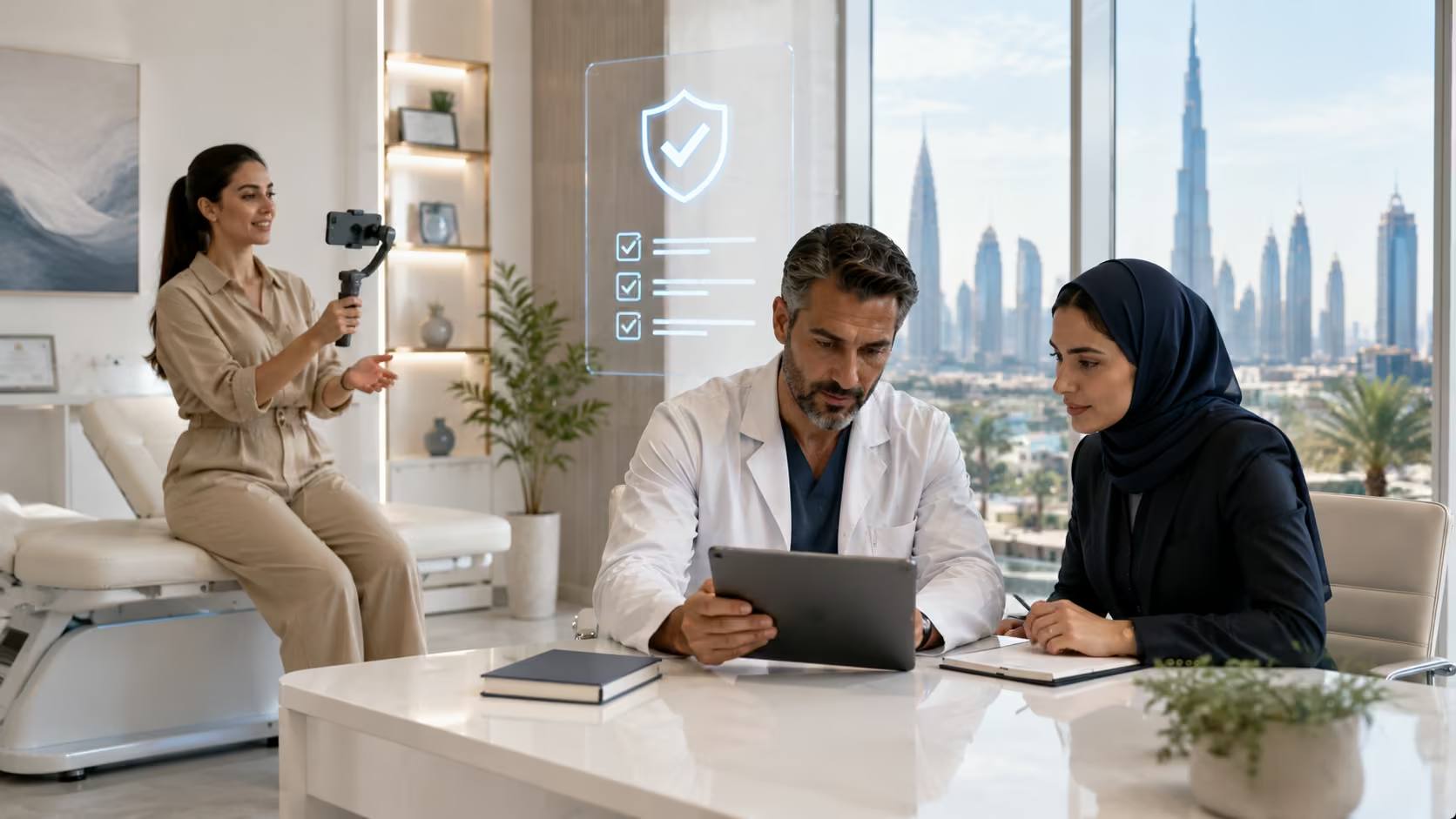
Medical Directors have a defined role in social media compliance
Under Version 1.1, the Medical Director of a DHA-licensed healthcare facility has defined responsibilities relating to medical social media advertising.
These include ensuring that advertising aligns with applicable laws and regulations, that content is factually accurate and substantiated, that risks and benefits are presented, that patient health information is protected, and that the organisation maintains controls and policies for social media activity. The standard also states that Medical Directors are accountable for the content and style of social media advertisements on accounts that promote the health facility.
The document goes further by referring to trained moderators, staff education, social media policies, archiving posts and edits for audit purposes, and including social media accounts within organisational risk assessments.
For marketing teams, this makes Medical Director review more than an informal request to “check the medical wording.” The published framework places social media governance within the facility’s wider regulatory responsibilities.
Professional titles need to match licensed status
DHA Version 1.1 states that healthcare facility staff and healthcare professionals should not use names or specialty titles that differ from their DHA licence. It gives examples of alternative cosmetic, aesthetic, beauty and anti-ageing titles that should not be substituted for licensed professional titles.
The standard also requires healthcare professionals using social media to clearly state their name, title, professional qualification and specialty as reflected in their DHA licence.
This makes profile bios, video introductions, captions, influencer scripts and promotional artwork relevant to compliance review—not only the claims made about a procedure.
A practical pre-publication check for healthcare social media content
The following framework is designed as a practical editorial checkpoint, not legal advice. It helps a marketing team identify content that may need further regulatory, clinical or licensing review before publication.
| Check | Question to ask before publication |
| Scope | Does the content promote a healthcare service, facility, professional, treatment, therapy or health-related outcome? |
| Account | Is it being published through a healthcare facility, healthcare professional, staff member or influencer connected to the provider? |
| Claim | Does it state or imply certainty, superiority, guaranteed results, immediate results or absolute safety? |
| Evidence | Can every treatment- or outcome-related claim be substantiated with appropriate evidence? |
| Risk balance | Where relevant, does the content avoid presenting benefits while concealing material risks, limitations or disadvantages? |
| Patient material | Does it include a patient image, video, statement, testimonial or identifiable health information? |
| Consent | Is documented consent available for the specific subject and permitted period of use? |
| Before-and-after content | Are the images authentic, associated with the actual treatment and presented with the required context about variable outcomes and risks? |
| Professional title | Does every professional title, specialty and qualification match the practitioner’s licensed status? |
| Influencer | If a creator or influencer is involved, has the facility reviewed the medical claims and final content? |
| Medical Director | Has Medical Director approval been obtained where the DHA standard requires it? |
| Advertising licence | Have applicable DHA, MOHAP and other competent-authority advertising or licensing requirements been checked? |
These questions reflect issues addressed in DHA’s published social media standard, including scope, substantiation, consent, professional titles, influencer content, Medical Director oversight and advertising licensing.
A “no” or “not sure” answer should generally pause publication until the relevant issue has been reviewed by the appropriate person within the organisation or, where needed, a qualified regulatory or legal adviser.
What should Dubai healthcare marketing teams review in content that is already online?
The pre-publication framework above is designed for new content. A separate task is auditing posts, videos and campaigns that are already live.
The August 2026 circular provides a useful trigger for that review, particularly because older social media assets may have been published under different internal processes or reused repeatedly over time.
An existing-content audit should look for:
- guaranteed or absolute outcome claims;
- wording such as “best,” “safest,” “only,” “100%,” “no side effects,” “assured success” or similar expressions;
- old patient testimonials for which documented consent cannot readily be verified;
- patient photographs or videos whose permitted purpose or consent period is unclear;
- older before-and-after posts that do not meet the published presentation requirements;
- influencer or creator content that did not pass the relevant facility review process;
- professional titles that do not match current DHA-licensed status;
- unclear governance between personal and professional social media accounts;
- visiting-doctor or internationally practising specialist accounts that combine Dubai and overseas healthcare promotion;
- gaps in Medical Director approval and content-archiving processes;
- missing or outdated advertising licensing checks; and
- patient media that has been reused on additional channels without confirming whether the original consent covers the new use.
This is not simply an exercise in deleting older posts. Some material may require correction, updated consent, clearer supporting information or further internal review.
DHA content compliance and MOHAP advertising licensing are separate questions
Healthcare advertising compliance in Dubai should not be reduced to a single approval.
DHA Version 1.1 states that social media advertising relating to healthcare services must comply with the standards as well as UAE federal and local laws and regulations. It also says that the official account of a healthcare facility must state the corresponding medical advertisement licence number provided by the Ministry of Health and Prevention (MOHAP).
MOHAP separately operates a health advertisement licensing service for advertisements through multiple media channels and electronic platforms. Its published conditions expressly state that a Ministry advertising licence does not exempt an institution from complying with requirements imposed by other relevant parties in relation to the services and products contained in the advertising material.
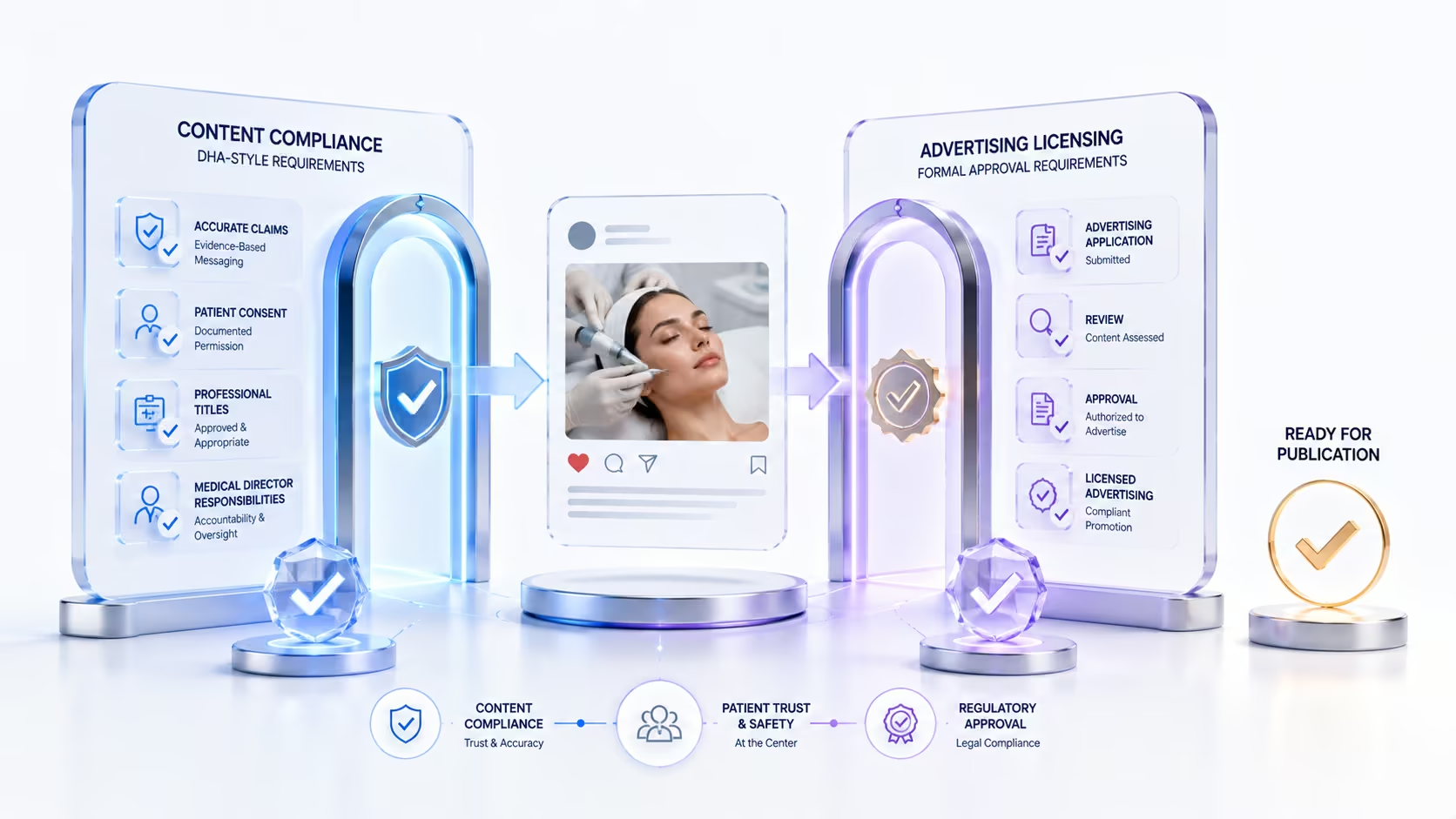
That creates two distinct questions for a Dubai healthcare advertiser:
- Is the content compliant with the applicable DHA healthcare advertising standards?
This concerns the substance and presentation of the advertising: claims, patient material, professional titles, Medical Director responsibilities, social media account use and the other requirements applicable to DHA-licensed providers.
- Have the required advertising licensing and approval requirements been completed with the relevant authority?
This concerns whether the organisation has completed the applicable licensing or approval process for the advertising activity or channel.
Passing one test should not automatically be treated as satisfying the other.
A medical advertising licence should therefore be considered alongside, rather than as a substitute for, content compliance with DHA requirements and any other rules imposed by the competent authority.
What does this mean for healthcare social media governance in Dubai?
For healthcare providers, the most useful response to the DHA circular is operational.
Social media compliance should begin before a caption reaches the publishing queue. Claims need a clear basis. Patient content needs traceable consent. Practitioner titles need to match licensed status. Influencer content needs an approval path. Before-and-after assets need to be assessed as medical advertising, not simply as visual marketing material.
The same principle applies to broader healthcare marketing in the UAE: regulatory jurisdiction, licensing and professional responsibilities need to be identified before a campaign is treated as ready for publication.
The August 2026 circular does not justify describing every detailed requirement in Version 1.1 as a new 2026 rule. It does, however, give DHA-licensed private healthcare organisations a clear reason to test whether their current social media practices still align with the standards DHA expects them to follow.
What should healthcare organisations do next?
For DHA-licensed healthcare providers, the most useful next step is a structured review rather than assuming that existing content remains suitable simply because it has been online for some time.
A practical sequence is to:
- review existing social media content and identify higher-risk advertising;
- verify patient-consent records and the scope and period of permitted use;
- reassess treatment claims, testimonials and before-and-after material;
- formalise Medical Director review where the DHA standard requires it;
- verify applicable DHA, MOHAP and other competent-authority licensing or approval requirements; and
- monitor future DHA circulars and regulatory updates rather than treating the August 2026 publication as a one-time compliance exercise.
For organisations producing healthcare content regularly, this process can form the basis of an internal healthcare social media compliance workflow, with separate guidance for patient consent in healthcare marketing and creator or influencer campaigns.
Regulatory note: This article is provided for general informational purposes only and does not constitute legal or regulatory advice. Healthcare facilities and professionals should review the current official DHA standards, relevant MOHAP requirements and any other rules applicable to their facility, profession, advertising activity and campaign before publication.
Frequently asked questions
Does the August 2026 DHA circular apply to all UAE healthcare providers?
The circular itself is addressed to licensed healthcare facilities and healthcare professionals in Dubai’s private sector. It should not be presented as defining the regulatory position for every healthcare provider throughout the UAE, where other competent authorities may have jurisdiction.
Are patient testimonials banned in Dubai?
Not categorically under the published DHA Version 1.1 standard. However, patient testimonials and other patient material are subject to consent and privacy requirements. DHA’s prohibited-content appendix specifically identifies patient testimonials without written patient consent as prohibited social media medical advertising content.
Can a clinic advertise guaranteed treatment results?
DHA’s published Version 1.1 standard restricts absolute and exaggerated claims and expressly lists terms such as “assured success,” “100%” and “absolutely certain.” Its prohibited-content appendix also identifies treatments that guarantee full recovery and unrealistic or absolute statements regarding effectiveness.
Are before-and-after photos allowed?
The published DHA standard does not treat every before-and-after image as automatically prohibited. It does, however, place specific conditions on their use, including authenticity, presentation, disclosure that outcomes may vary, accompanying risk information and the requirement for written patient consent.
Can healthcare providers use influencers in Dubai?
DHA Version 1.1 specifically addresses influencer advertising. Where an influencer promotes an activity, healthcare service or outcome and identifies a healthcare facility by name or location, the standard says Medical Director approval should be obtained. Content filmed at the facility is also addressed within the facility’s responsibilities.
Do DHA social media advertising standards apply to a doctor’s personal account?
The position is more specific than saying every personal post by a doctor is medical advertising.
DHA’s published standard requires healthcare professionals to separate professional and personal social media accounts. It makes healthcare professionals accountable for social media advertising content associated with their professional activity and also addresses SMA content appearing on personal accounts. Whether a particular post falls within the advertising framework depends on its content and professional connection.
For visiting healthcare professionals and doctors working in Dubai and other countries, the standard also requires separation of the Dubai healthcare-services account and applies DHA requirements to material used on that account.
Does a MOHAP advertising license mean a Dubai clinic automatically complies with DHA requirements?
No. MOHAP states that its advertising license does not exempt an institution from requirements imposed by other relevant parties. DHA separately sets content and professional requirements for DHA-licensed healthcare facilities and professionals using social media advertising.