If you have been researching Meta advertising costs in Dubai, you’ve probably noticed that no two articles seem to agree on the answer.
Some suggest that a few hundred Dirhams is enough to start generating leads. Others recommend allocating several thousand before expecting meaningful results. Most focus heavily on CPCs, CPMs, and advertising benchmarks without explaining why businesses operating in the same market often experience completely different acquisition costs.
One of the reasons this topic creates so much confusion is that Meta advertising doesn’t behave like a fixed-cost marketing channel. Unlike Google Ads, where users actively search for products or services, Facebook and Instagram campaigns rely on capturing attention before intent exists. Success depends on far more than budget alone. Audience quality, creative performance, offer positioning, competition, and conversion experience all influence the final cost of acquiring a customer.
We’ve seen this repeatedly while reviewing campaigns across the UAE. Two businesses can invest similar amounts, target broadly similar audiences, and run campaigns on the same platform, yet produce completely different commercial outcomes. One builds a steady flow of qualified enquiries. The other generates clicks, engagement, and traffic without producing meaningful business opportunities.
This is why the most useful question is rarely “How much do Meta Ads cost?”
A better question is:
How much does it cost to generate profitable leads through Meta Ads in your market?
The answer to that question is usually far more valuable than any average CPM or CPC benchmark.
The Problem With Most Meta Ads Cost Guides
If you spend enough time researching advertising costs, you’ll quickly notice a pattern. Most articles focus on platform metrics because they’re easy to publish and easy to compare.
Average CPC.
Average CPM.
Suggested daily budgets.
Monthly advertising spend.
While these numbers provide some context, they often create the false impression that Meta advertising costs can be predicted before a campaign even launches.
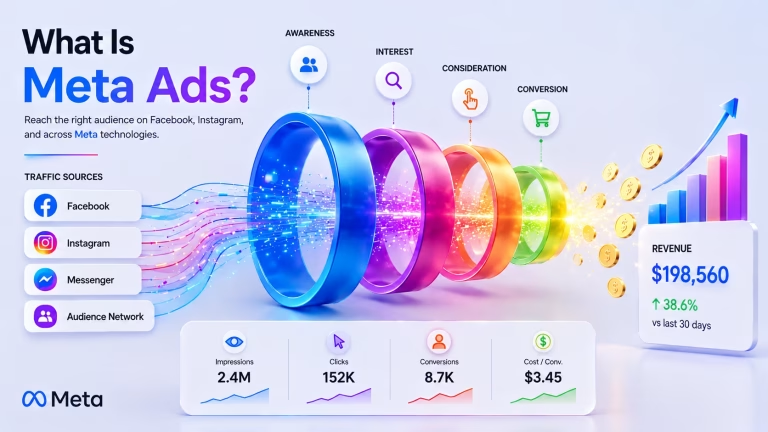
In reality, things are rarely that straightforward. Before mapping out budgets, having a clear understanding of what is meta ads and how its auction system delivers impressions is essential. Consider three businesses operating in Dubai.
In reality, things are rarely that straightforward.
Consider three businesses operating in Dubai.
A healthcare clinic attracting new patients.
A business setup consultancy helping entrepreneurs establish companies in the UAE.
A luxury real estate developer marketing waterfront properties to international investors.
All three businesses advertise on the same platform. All three participate in the same auction system. Yet the economics behind those businesses are completely different.
The value of a customer is different.
The buying journey is different.
The level of competition is different.
The amount of trust required before a prospect converts is different.
This is why average advertising benchmarks should be treated as reference points rather than planning tools.
A campaign generating leads at AED 50 may be highly profitable for one business and completely unsustainable for another.
Without understanding customer value, conversion rates, and acquisition economics, cost benchmarks provide only part of the picture.

Why Lower Cost Per Lead Doesn’t Always Mean Better Performance
One of the most common misconceptions we encounter during account audits is the assumption that lower acquisition costs automatically indicate stronger campaign performance.
At first glance, the logic seems reasonable.
If one advertiser generates leads for AED 40 while another pays AED 100, the first campaign appears significantly more efficient.
The problem is that advertising platforms don’t tell the full story.
Inside Meta Ads Manager, both conversions look identical.
Inside the business, they may be completely different.
A lead generated for a luxury property developer, a business setup consultancy, or an education provider can be worth substantially more than a lead generated for a lower-value product or service. Yet reporting dashboards rarely reflect that difference.
This is where many businesses unintentionally optimise for the wrong outcome.
They focus on lowering acquisition costs without evaluating lead quality.
As campaigns become increasingly optimised for cheaper traffic, the algorithm often begins finding people who are easier to convert but less likely to become customers.
The reporting dashboard improves.
Cost per lead decreases.
Conversion volume increases.
Meanwhile, sales teams begin reporting lower enquiry quality.
We’ve seen this happen repeatedly across multiple industries.
On paper, campaign performance appears stronger.
Commercially, performance declines.
The strongest advertisers rarely evaluate campaigns using a single metric. They look at lead quality, customer value, sales conversion rates, and profitability alongside acquisition costs.
The goal is not to generate the cheapest leads possible.
The goal is to generate profitable customers consistently.
Those are two very different objectives.
Why Meta Advertising Costs Feel Higher In Dubai
When businesses say Meta Ads have become expensive, they’re often describing the symptoms rather than the cause.
Dubai is one of the most competitive advertising markets in the region. Businesses across real estate, healthcare, hospitality, education, finance, luxury retail, and professional services compete for the same audience attention every day.
That competition naturally influences advertising costs. As an established digital marketing agency in dubai, we’ve reviewed campaigns where advertisers blamed rising CPMs for poor results, only to discover that the real issue was creative fatigue. Audiences had simply seen the same message too many times.
That competition naturally influences advertising costs.
However, competition alone rarely explains campaign performance.
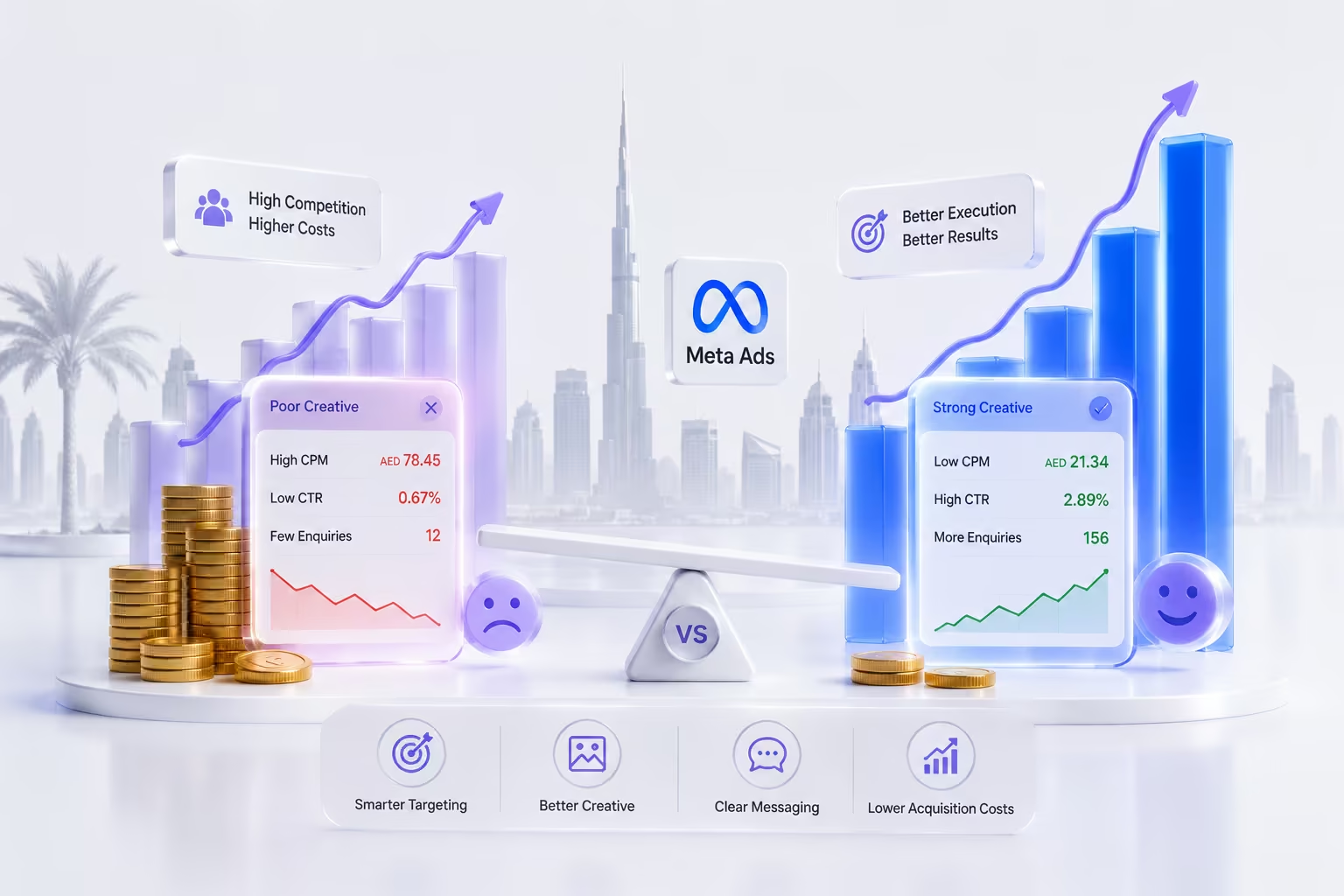
In many cases, audience targeting and creative quality have a bigger impact than the level of competition itself.
We’ve reviewed campaigns where advertisers blamed rising CPMs for poor results, only to discover that the real issue was creative fatigue. Audiences had simply seen the same message too many times.
We’ve also reviewed campaigns where broad audience targeting generated impressive reach numbers but failed to produce meaningful enquiries because the campaign prioritised volume over relevance.
Meta’s algorithm rewards engagement and user experience. Campaigns with stronger creatives, clearer messaging, and more relevant offers often achieve better efficiency than campaigns relying solely on larger budgets.
This is one reason two competitors can advertise in the same market while experiencing very different acquisition costs.
The difference isn’t always budget.
Often, it’s execution.
When More Traffic Doesn’t Create More Leads
One of the most valuable lessons we’ve learned from reviewing Meta advertising campaigns is that traffic problems and conversion problems are rarely the same thing.
Businesses often assume that more traffic automatically creates more enquiries. It sounds logical. If more people are visiting your website, more people should eventually become leads. Unfortunately, that isn’t always what happens.
A good example comes from an education campaign promoting MBA programs and study opportunities in Germany. When we first reviewed the account, there was little reason to believe performance was under pressure. Traffic levels were healthy, engagement metrics looked reasonable, and the campaigns were consistently attracting new visitors. Yet the number of qualified enquiries remained significantly lower than expected.
The issue wasn’t visibility, reach, or budget. The challenge was audience quality and campaign structure. A large portion of the traffic interacting with the ads had little intention of submitting an application or starting a conversation. The account was generating activity, but much of that activity wasn’t translating into meaningful business outcomes.
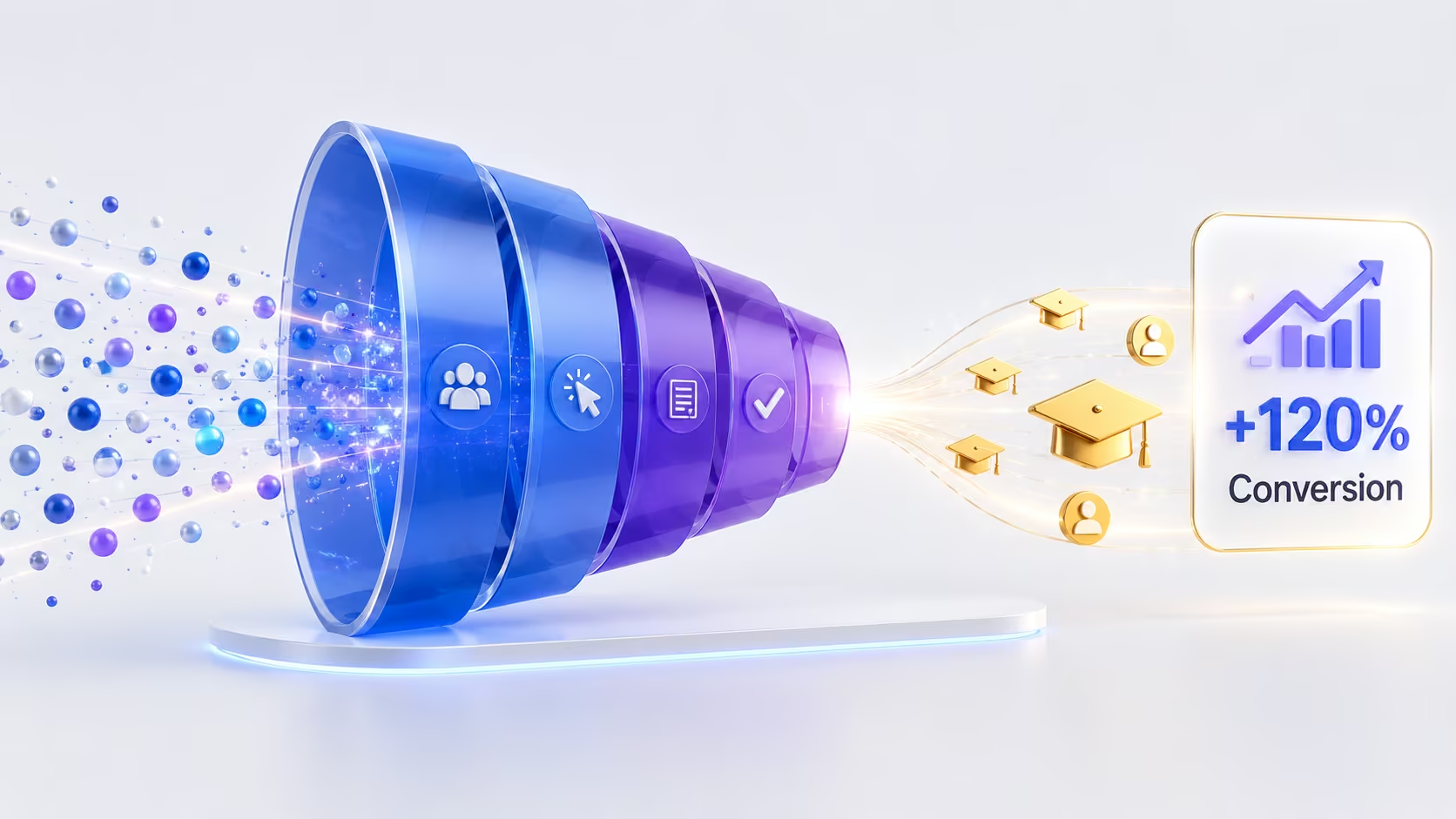
To address the problem, we restructured audience segments, refined bidding priorities, introduced retargeting campaigns across multiple placements, and focused more heavily on users demonstrating stronger intent signals. The results were significant:
- Conversion Growth: Qualified conversions increased by more than 120%.
- Cost Efficiency: The cost per conversion decreased by approximately 35%.
Nothing changed about the market itself. Competition remained competitive and advertising inventory remained the same. What changed was the quality of the traffic entering the funnel. This is an important distinction because profitable Meta campaigns are rarely built by buying cheaper traffic—they’re built by attracting more relevant traffic.
What Determines Meta Ads Costs More Than Most Businesses Realise
Many discussions about Meta advertising costs focus almost entirely on audience targeting. While targeting certainly matters, it’s only one part of a much larger equation. Creative performance often plays a far bigger role than many advertisers realise.
People don’t open Instagram or Facebook looking for your business. They open those platforms to consume content, interact with friends, watch videos, and browse updates. Your advertisement interrupts that experience. Within seconds, users decide whether your message deserves attention. If the creative fails to create interest, advertising costs begin increasing regardless of how accurately audiences are targeted.
Landing page experience also plays a major role. A campaign can generate qualified traffic and still underperform if the post-click experience creates friction. Slow loading pages, weak offers, confusing messaging, and poor user experience all increase acquisition costs because they reduce conversion efficiency.
We’ve seen this happen in industries where lead values are extremely high, particularly for a GCC-based company formation and business setup provider. The account was generating a consistent flow of clicks and website visits, yet enquiry volume remained below expectations.
Initially, the assumption was familiar: advertising costs in Dubai had simply become too expensive. After reviewing the account, the issue turned out to be something else entirely. Several high-spend ad sets and creative angles were absorbing the majority of the budget without generating meaningful enquiries. At the same time, stronger-performing audience buckets and high-hook creatives weren’t receiving enough delivery from the algorithm. We also identified technical issues affecting conversion paths on the mobile landing pages, including call-to-action elements that were breaking user flow.
Once budget allocation was refined across the top-performing ad sets, creative fatigue was resolved with fresh hooks, and conversion friction was eliminated, campaign performance improved substantially. As an experienced meta ads agency, we use this exact framework of engineering high-intent funnels to precisely scale competitive regional sectors:
Premium Real Estate Acquisition: Discover how we filtered low-intent clicks to build a qualified investor pipeline in our Dubai Real Estate Campaign Case Study.
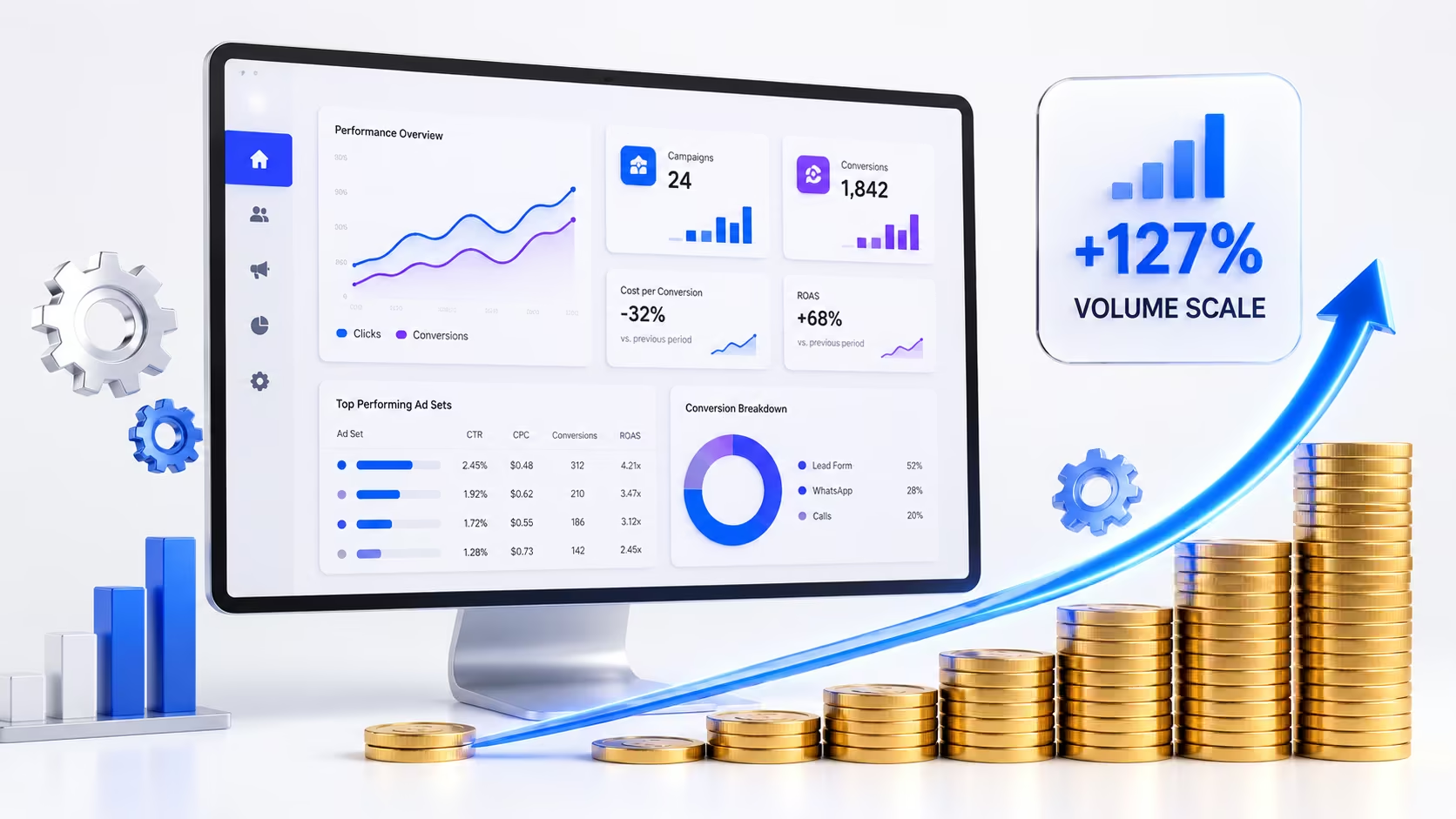
- Volume Scaled: Qualified conversions increased by 127%.
- Conversion Rate: Overall conversion rate improved by more than 35%.
- Cost Reduction: Cost per conversion decreased by nearly 25%.
The interesting part is that advertising costs themselves didn’t suddenly become cheaper. The account simply became more efficient. This framework of engineering high-intent funnels is exactly how we scale competitive regional sectors:
- Premium Real Estate Acquisition: Discover how we filtered low-intent clicks to build a qualified investor pipeline in our Dubai Real Estate Campaign Case Study.
- Luxury B2C Asset Scaling: Explore the precise audience and creative filters we deployed to maintain high-converting consumer engagement in our Premium Beauty Service Dubai Case Study.
How We Approach Meta Ads Budget Planning
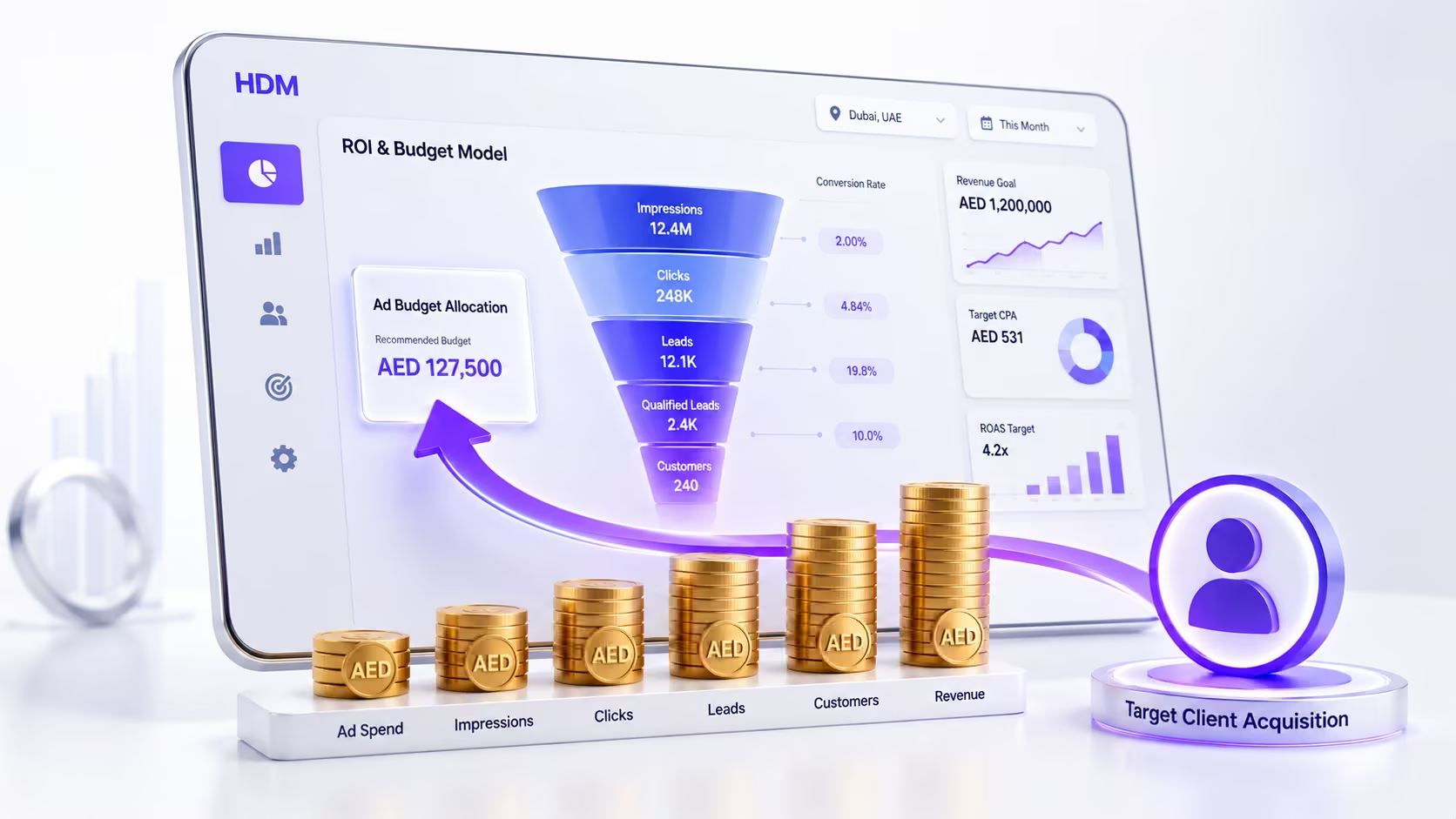
When businesses ask how much they should spend on Meta Ads, our first conversation rarely focuses on advertising spend. Instead, we focus on business objectives.
How many qualified enquiries are required each month? What percentage of those enquiries become customers? What is the average value of a customer? How much can the business afford to spend to acquire one new client while remaining profitable?
Only after answering those questions does budget planning begin. This approach often produces more realistic recommendations than relying on industry averages alone because it connects advertising investment directly to business outcomes.
A business pursuing aggressive growth will require a different budget strategy than a company focused on maintaining existing lead volume. A high-ticket B2B service will require a different approach than an eCommerce store. The right budget is not determined by what competitors spend—it’s determined by the economics of your business.
In practice, this is one of the biggest differences between businesses that use Meta Ads successfully and those that struggle to generate a return. Successful advertisers start with customer acquisition goals and work backwards. Struggling advertisers often start with a budget number and hope the results eventually justify the investment.
Beyond Advertising Costs: The Question That Actually Matters
The phrase “Meta Ads Cost In Dubai” generates thousands of searches because it’s the question businesses naturally ask when evaluating paid social advertising. But after enough campaigns, most advertisers realise the conversation eventually changes.
The focus shifts away from “How much does Meta advertising cost?” and toward “How much does it cost to acquire a profitable customer?” That’s where meaningful decisions are made. Because a campaign generating high-quality customers can justify surprisingly high acquisition costs, while a campaign generating poor-quality leads can become expensive even when traffic appears cheap.
Businesses that consistently succeed with Meta advertising understand this distinction early. They stop evaluating Meta Ads as a marketing expense and start evaluating them as a customer acquisition channel that must be measured against revenue, profitability, and growth objectives.
The platform can provide averages. Benchmarks can provide context. But neither can tell you what success should look like for your business. That requires understanding your market, your customers, your conversion process, and the economics that drive sustainable growth.
If you’re evaluating Meta Ads as a lead generation channel, the most useful next step isn’t comparing generic CPM benchmarks. It’s understanding what a realistic customer acquisition cost looks like for your specific business and whether your current campaign structure is capable of delivering it. That’s ultimately what determines the true cost of Meta advertising.
Ready to Stop Buying Clicks and Start Engineering Profitable Funnels?
Average industry benchmarks won’t scale your business in a market as competitive as Dubai. What you need is an acquisition strategy tailored strictly to your customer lifetime value and unit economics.
Let’s look beneath the surface of your current Meta Ads Manager. Book a Meta Ads Strategy Review Session with our team today, and let’s map out a predictable path to profitable growth.