
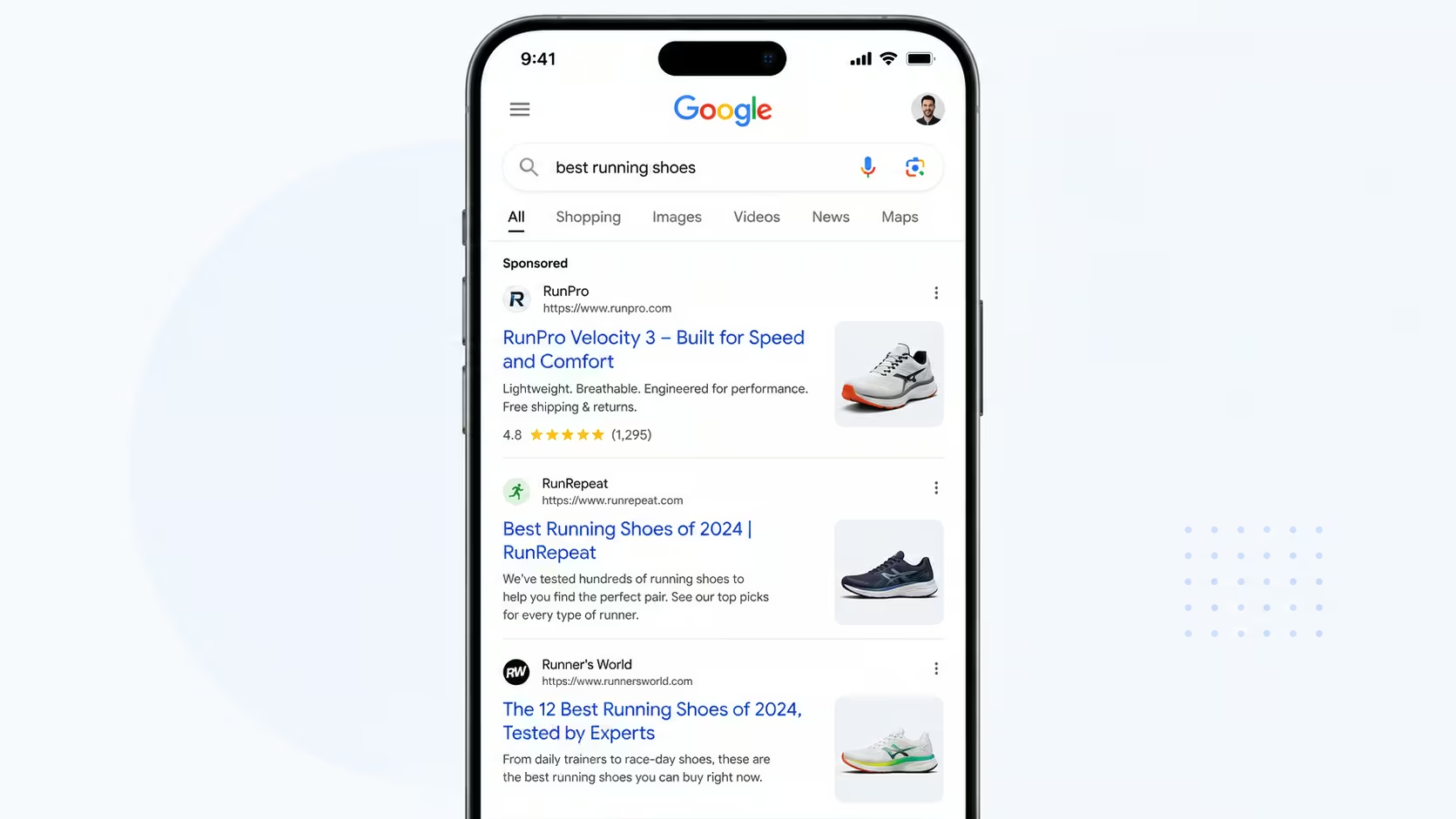
If you’ve ever searched for a product or service online and noticed sponsored results appearing before the organic listings, you’ve already encountered PPC advertising.
A business owner looking for accounting software, a homeowner searching for an emergency electrician, or a shopper comparing laptop prices may all see paid advertisements before they reach the regular search results. Those businesses are not appearing there by chance. They are using Pay-Per-Click advertising to place their message in front of people who are actively searching for a solution. Recent digital marketing benchmarks show that businesses make an average of $2 in revenue for every $1 they spend on Google Ads, proving the massive economic scale of this ecosystem.
This ability to connect with potential customers at the exact moment of intent is one of the reasons PPC remains one of the most widely used forms of digital advertising.
But despite its popularity, PPC is often misunderstood. Some businesses assume it’s simply a way to buy traffic. Others expect immediate sales without considering campaign strategy, landing pages, or conversion tracking. In reality, PPC is a performance-driven advertising model that rewards relevance, targeting, and optimization. Understanding how PPC works is the first step toward deciding whether it’s the right marketing channel for your business growth.
Understanding PPC Advertising
PPC stands for Pay-Per-Click advertising. As the name suggests, advertisers pay a fee each time someone clicks on their ad rather than when the ad is simply displayed to a passive viewer. This model allows businesses to buy highly targeted visibility instead of waiting for organic rankings to develop over time through content creation.
Unlike traditional advertising channels that broadcast a message to a broad, unsegmented audience (like a television commercial or a physical billboard), PPC focuses strictly on reaching users who have already demonstrated interest. This is achieved through analyzing their search behavior, active browsing activity, or specific demographic audience characteristics.
This granular control makes PPC particularly valuable for businesses that need measurable results, predictable lead generation, or a faster route to market visibility. While search engines originally popularized the PPC advertising model, it now exists natively across multiple digital channels, including search engines, social media networks, e-commerce marketplaces, and digital video platforms.
Why Businesses Use PPC Advertising
One of the biggest advantages of PPC advertising is speed. A brand-new website may take months of consistent effort to build meaningful organic visibility through search engine optimization. A well-structured PPC campaign, however, can begin generating high-intent traffic and active leads almost immediately after going live.
That doesn’t mean PPC replaces SEO. The two channels serve entirely different purposes within a modern marketing funnel:
- SEO (Search Engine Optimization): Focuses on long-term authority, sustainable traffic growth, and equity.
- PPC (Pay-Per-Click): Focuses on immediate access to potential customers who are already searching, comparing, or actively evaluating solutions.
Businesses often deploy PPC campaigns when they want to generate leads quickly, increase online sales, launch a brand-new service, test a fresh market opportunity, promote a limited-time offer, or validate customer demand before building a product. The common factor behind all of these goals is the ability to reach people at the exact right moment of demand rather than hoping they eventually discover your business on their own.
How PPC Advertising Works: The Real-Time Auction
At its core, PPC advertising operates through an automated, highly sophisticated real-time auction system. When a user performs a search query or visits a digital platform that supports advertising, the platform evaluates all competing advertisers targeting that placement in a fraction of a second. The system then determines which ads appear, and in what exact order.
Many people assume the advertiser with the highest budget or the highest maximum bid automatically wins the top spot. In practice, modern advertising platforms consider far more than bid amounts alone. Factors such as ad relevance, quality score, expected click-through rates, and landing page experience heavily influence whether an ad appears and how much the advertiser ultimately pays.
This quality-first approach is the primary reason smaller businesses can compete effectively against larger corporations with massive budgets. A highly relevant advertisement supported by a lightning-fast, high-converting landing page can easily outperform bloated campaigns backed by significantly larger budgets. The ultimate goal of PPC platforms is to deliver helpful, highly relevant experiences to users while generating sustainable revenue from satisfied advertisers.
The Anatomy of a PPC Campaign Hierarchy
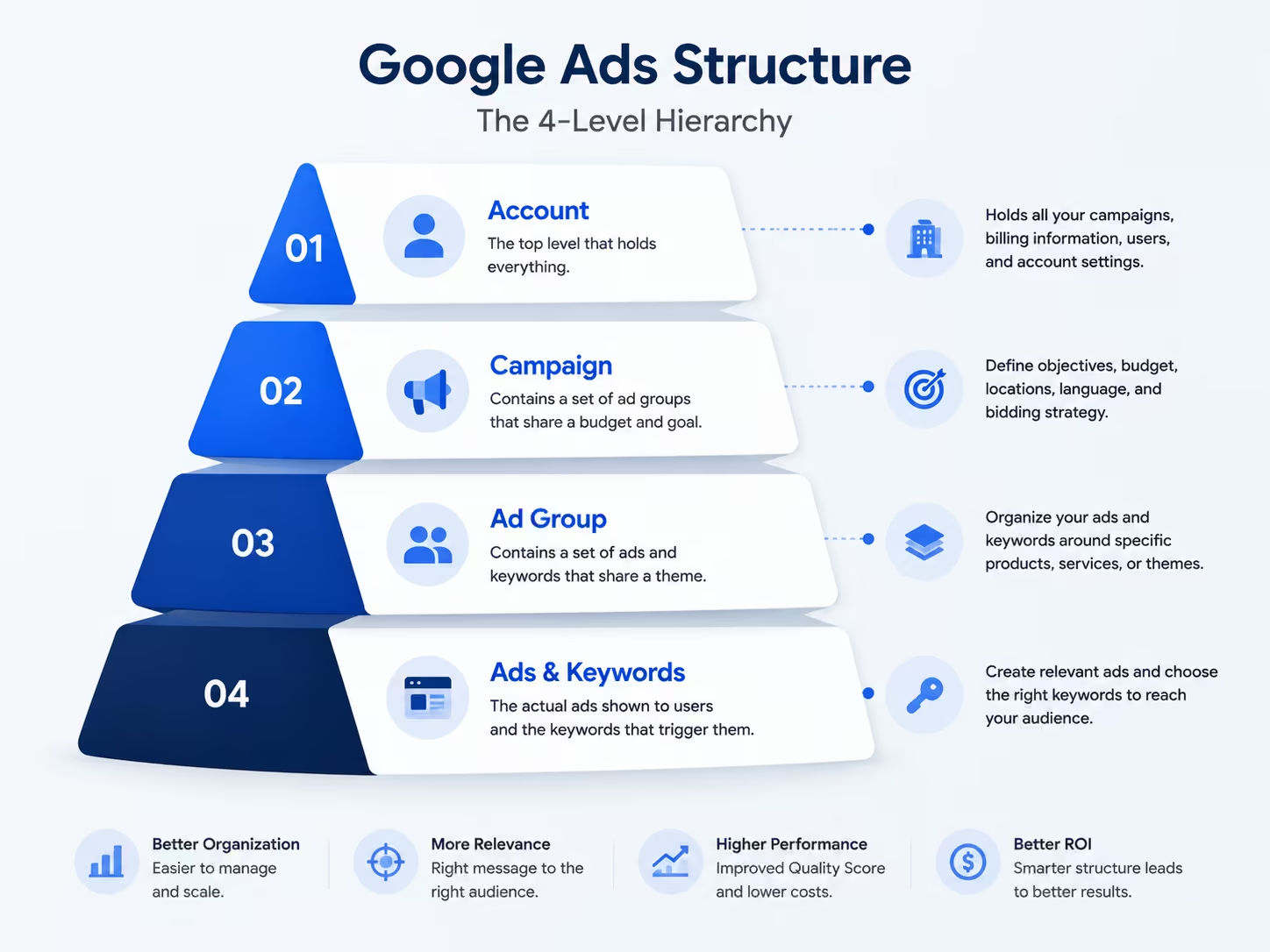
To build a scalable pay-per-click framework, you must understand how a professional account is structured. Skipping this hierarchy results in disorganized campaigns and wasted ad spend.
[Account Level]
└── [Campaign Level] (Budgets & Goals)
└── [Ad Group Level] (Targeting & Keywords)
└── [Ads & Keywords] (Creatives & Copy)
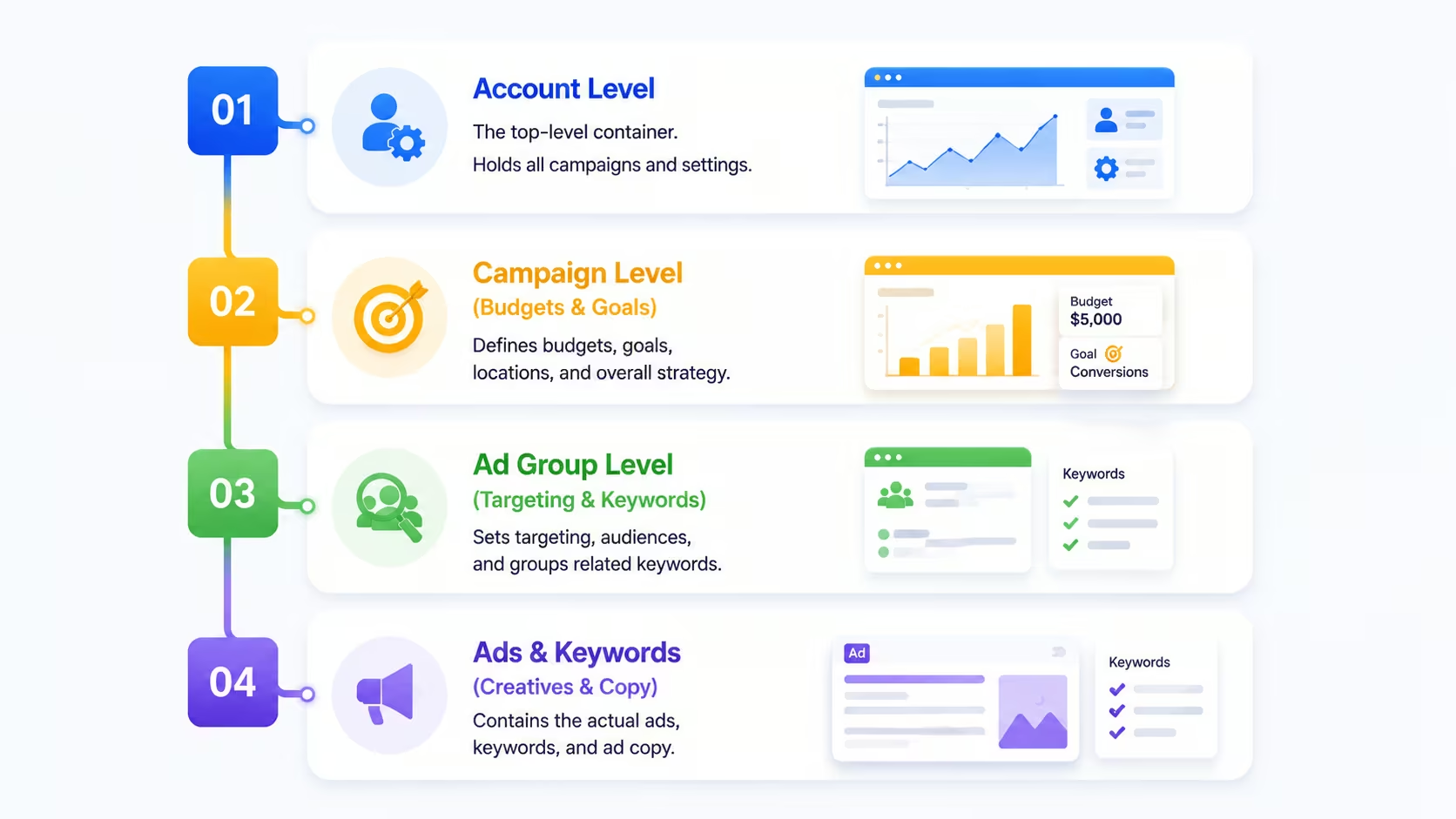
1. Account Level
This is the macro layer. It contains your unique business information, billing details, global conversion tracking tags, and core administrative access controls.
2. Campaign Level
At the campaign level, you define your specific business objectives (e.g., Lead Generation vs. Website Traffic), select your geographic targeting, set your daily budgets, and choose your automated bidding strategies.
3. Ad Group Level
Underneath each campaign sit ad groups. Ad groups are themed buckets used to organize your targeting. Here, you group closely related keywords or specific target audiences together so that your messaging remains hyper-focused.
4. Ads and Keywords Level
This is what the user actually interacts with. It contains your ad creatives (headlines, images, descriptions, or video assets) tied directly to the specific keywords or audience segments defined in the parent ad group.
PPC Pricing Models: Beyond Just Clicks
While “Pay-Per-Click” is the overarching name of this marketing discipline, digital advertising networks offer different bidding methods based on what your business wants to achieve:
- CPC (Cost Per Click): The traditional model. You are charged only when a user interacts and clicks your asset. Best for driving active traffic and direct conversions.
- CPM (Cost Per Mille): You pay a set fee for every 1,000 times your ad is displayed on screen, regardless of clicks. Best for brand awareness and video view campaigns.
- CPA (Cost Per Action): A highly advanced automated model where you optimize your bidding around specific user actions, such as form submissions, app installs, or purchases.
The Main PPC Advertising Platforms
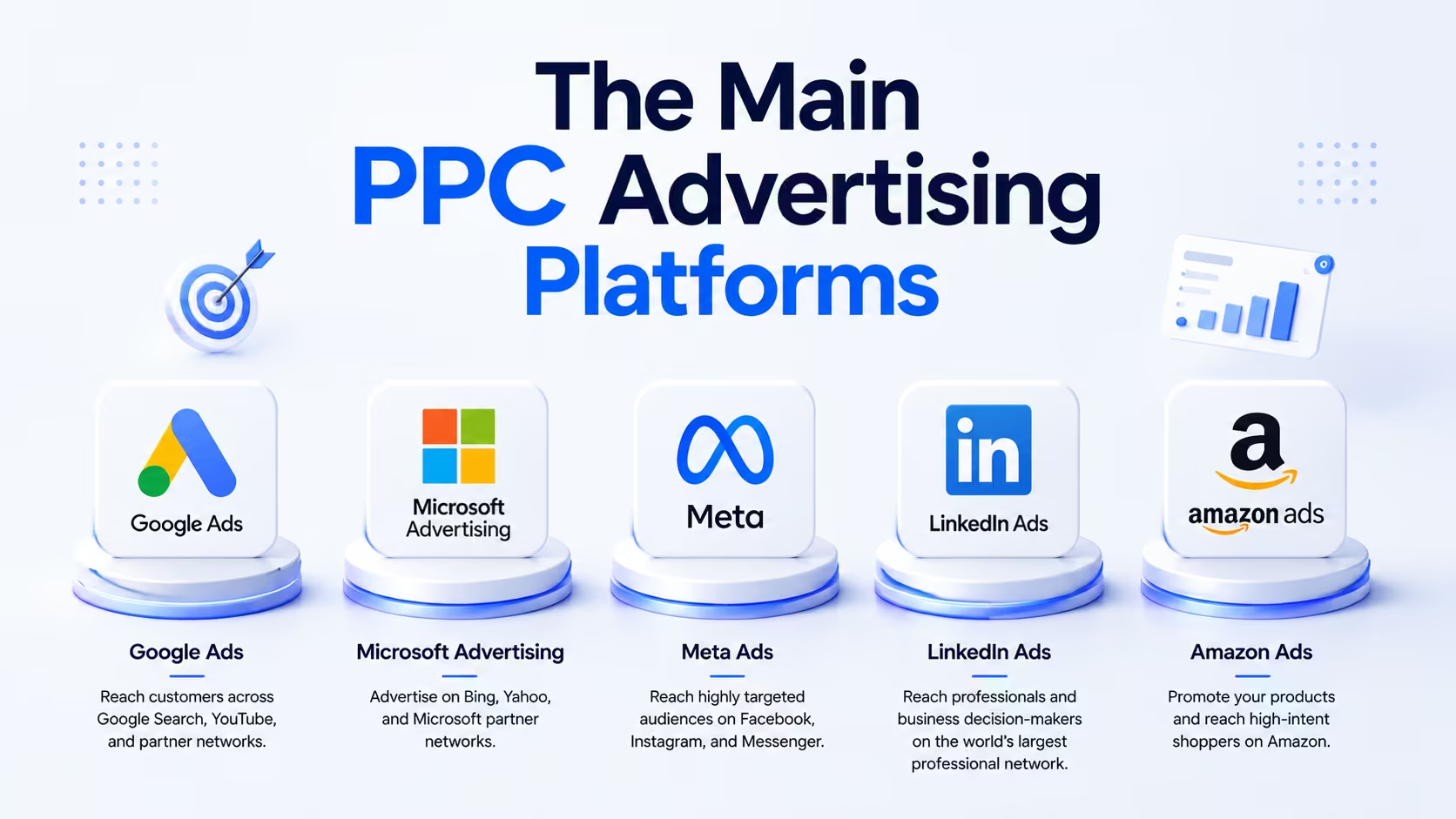
When people hear the term PPC, they often think only about Google Ads. While Google remains the dominant force in search, it is only one part of a much broader advertising ecosystem.
Google Ads
Google Ads is the most recognized PPC platform globally. It allows businesses to appear within Google Search results, YouTube videos, Google Maps, and Google’s massive Display Network. For many businesses, search advertising through Google is the most direct way to capture existing market demand because users are actively typing in their problems.
For a deep dive into this platform, check out our companion guide: What Is Google Ads
Microsoft Ads
Microsoft Ads operates across Bing, Yahoo, and AOL partner networks. Although it generally commands lower search volume than Google, it provides access to distinct, often affluent corporate audiences that are overlooked by advertisers focused exclusively on Google Ads, frequently resulting in a lower average CPC.
Meta Ads
Meta Ads includes advertising across Facebook, Instagram, Messenger, and the Audience Network. Unlike search advertising, which targets active intent, Meta advertising uses advanced demographic and behavioral data to generate awareness and influence purchasing decisions before users even begin searching.
LinkedIn Ads
LinkedIn advertising is the golden standard for B2B companies that want to target professionals based on industry, explicit job titles, company size, and specific business attributes. While the minimum entry costs and CPCs are higher than other platforms, the targeting capabilities for specialized enterprise campaigns are unmatched.
Amazon Ads
Amazon Ads has rapidly evolved into a massive PPC powerhouse, specifically designed for e-commerce brands and product sellers. It allows businesses to promote their products directly within Amazon’s search results, product detail pages, and across its broader video and device network.
The unique strength of Amazon advertising is its position at the absolute bottom of the purchase funnel; users on Amazon are not looking for general information or social interaction—they are searching with an immediate intent to buy. While competition inside the marketplace can be fierce, leveraging Amazon’s sponsored products is one of the fastest ways to scale digital retail sales and capture high-converting transactional traffic.
Understanding the Metrics Behind PPC
One reason PPC has become an indispensable marketing channel is the ability to measure performance with absolute precision. Unlike traditional advertising, PPC campaigns generate detailed real-time data. To evaluate efficiency, ensure these core metrics are tracked and calculated correctly within your analytics dashboards:
Understanding these metrics is important, but interpreting them within the specific context of your overall business profit margins is even more important.
PPC Advertising vs SEO
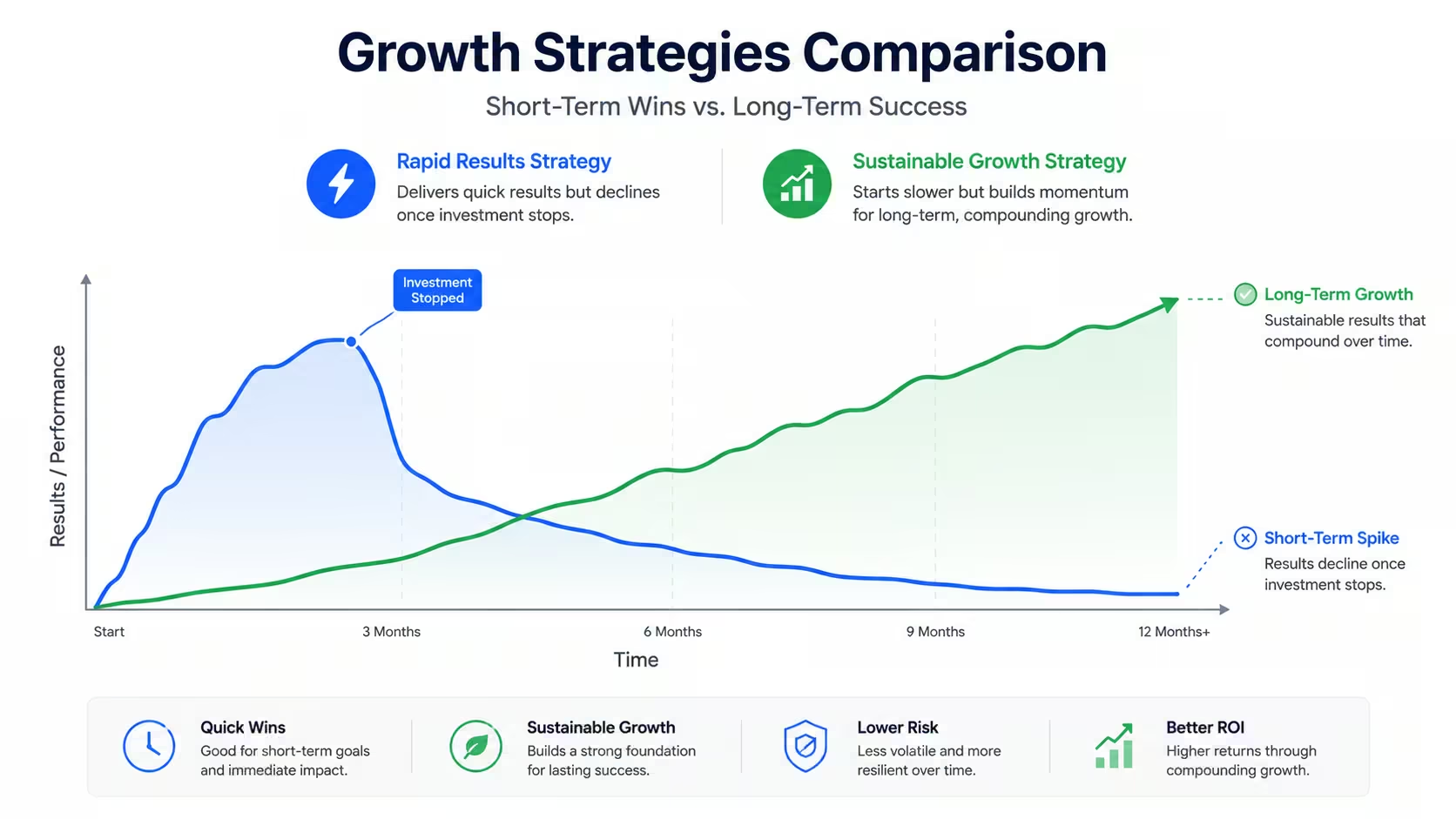
Businesses frequently compare PPC and SEO as if they are competing, adversarial strategies. In reality, they solve different problems at different stages of business maturity.
SEO is designed to build long-term organic visibility. Results take time and architectural effort, but successful SEO campaigns generate ongoing web traffic without paying a direct fee for every visitor. PPC provides immediate visibility. Businesses can appear in front of their target audience almost immediately, but traffic typically ceases the exact moment your advertising spend stops.
The strongest digital marketing frameworks combine both approaches into a unified strategy. PPC can generate immediate pipeline opportunities and validate keyword conversions, while SEO builds long-term domain authority and sustainable traffic growth. Rather than choosing one or the other, businesses benefit from treating them as dual engines of a single growth machine.
Is PPC Advertising Right for Your Business?
PPC can be highly effective, but it isn’t a silver bullet for every situation. Businesses typically see the strongest return on investment when:
- There is a proven, documented online search demand for the product or service.
- Your gross product margins can comfortably support the cost-per-click dynamics.
- Your website landing pages are optimized for speed, clarity, and mobile user experience.
- Rigorous conversion tracking is implemented natively across the site.
- Campaigns are actively managed, audited, and optimized weekly.
On the other hand, businesses with weak offers, slow websites, or broken conversion funnels will struggle regardless of how much budget they inject into advertising networks. PPC works best when it becomes a tactical multiplier of a broader growth strategy rather than being treated as a desperate shortcut to instant sales. If you want to integrate paid traffic seamlessly into your overall funnel, partnering with a full-service digital marketing agency ensures all your marketing channels work in perfect harmony.
Why PPC Management Matters
Launching a campaign is relatively easy; building a consistently profitable asset is much harder. Successful PPC advertising requires ongoing keyword research, negative keyword auditing, audience analysis, landing page conversion adjustments, bid management, performance monitoring, and systematic A/B split testing.
Many businesses discover that the majority of campaign breakthroughs happen after launch through data evaluation rather than before it. This is why professional, data-driven strategy has a significant impact on your final numbers. The objective is never simply to generate arbitrary clicks—it is to capture highly qualified traffic that predictably contributes to business growth.
Explore our dedicated optimization workflows here: PPC Management Services
Final Thoughts
PPC advertising remains one of the most measurable, scalable, and controllable customer acquisition channels available to modern businesses. Its unmatched strength comes from targeting active intent. Rather than interrupting broad audiences with generic, disruptive messages, PPC allows businesses to connect with people who are already searching, researching, comparing, or considering a purchase.
That doesn’t guarantee instant success. Effective PPC campaigns still require consistent strategy, ongoing testing, data-driven optimization, and a clear understanding of your customer’s digital footprint. But for businesses that demand faster market visibility, clear performance tracking, and absolute control over their customer acquisition costs, PPC advertising is an invaluable pillar of a successful digital marketing strategy.