
Sometimes, you may receive significant traffic from Google Ads, but the number of users who make calls or sign up is still insufficient. This situation indicates that your Google Ads conversion rate is low. Google Ads is one of the most effective methods for driving targeted traffic to your landing page. However, when user clicks don’t result in sign-ups, purchases, or other desired actions, your advertising budget is essentially wasted. The issue begins when there are "clicks," but no results follow. In this specialized article, we will examine why your Google Ads conversion rate is low (even with clicks) and what you should do about it.
What is Conversion Rate in Google Ads?
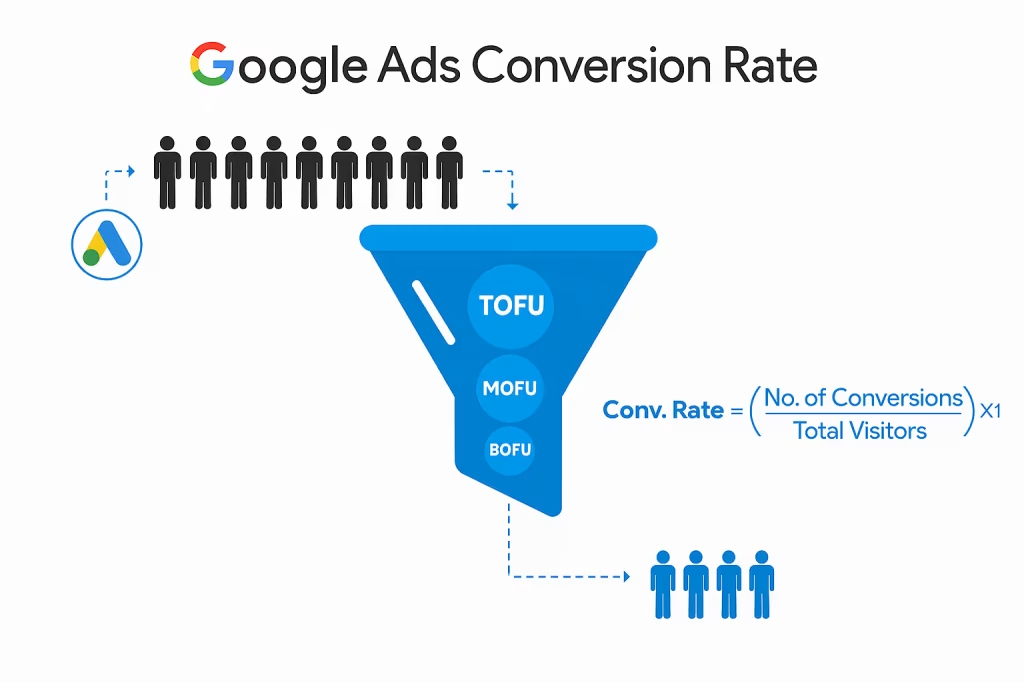
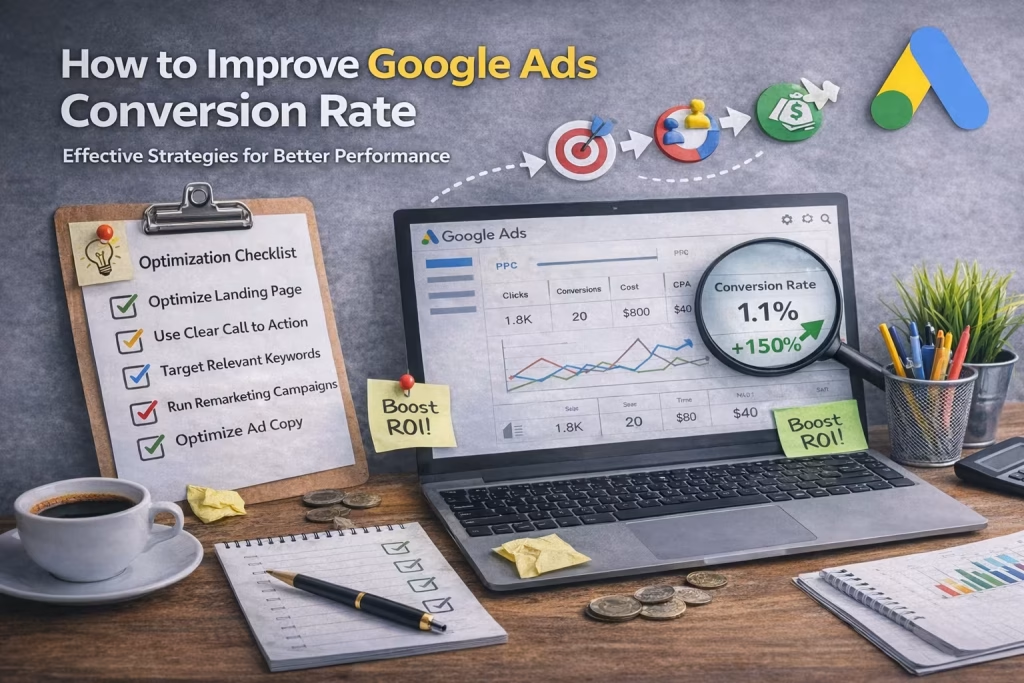
Conversion rate in Google Ads refers to the percentage of users who, after clicking on your ad, completed your desired action, such as making a purchase, registering, filling out a form, or making a call. The conversion rate metric shows how successful your ad has been in converting regular users into real customers or leads. For example, if your ad receives 100 clicks, and out of those, 5 people made a purchase or completed a registration form, your conversion rate would be 5%. Analyzing this number helps you understand how well the traffic, landing page, and ad message align with your business goal.
Why Does Conversion Rate Matter in Google Ads?
The most important reason conversion rate matters is that it tells you whether your advertising budget has been truly profitable or if you’ve only purchased clicks. Some other reasons why conversion rate is crucial in Google Ads include:- Lowering Customer Acquisition Cost (CPA)
- Improving Quality Score
- Increasing Return on Ad Spend (ROI)
- Improving the quality of leads and customers
- Assisting in smart campaign optimization
- Enabling more accurate decisions for ad budget allocation
Why is the Google Ads Conversion Rate Low? (Even with Clicks)
Receiving clicks alone doesn’t signify a successful campaign. The quality of clicks and the user experience once they enter the website also play a role. In many unsuccessful campaigns, failure often occurs during the user conversion path. From choosing the wrong keywords to a poor landing page or unclear ad messaging, all these factors can cause users to leave your website without taking any further action. Here are some reasons why your conversion rate may be low, and we will review each one:- Issues with Keywords
- Landing Page Experience
- Remarketing Campaigns
- Ad Copy Optimization
- Irrelevant or Low-Quality Clicks
- Lack of Proper Call to Action (CTA) on the Ad and Website
- Lack of Variety in Calls to Action
- Focusing on Competitor Advantages
- Ignoring Clear and Creative CTAs
- Slow Page Load Speed
- Incorrect or Flawed Tracking
- Ignoring Click-to-Lead Conversion Rate
- Ambiguous Product or Keyword Mismatch
- Pricing and Lead Quality Issues
- Campaign Structure and Settings Issues
Issues with Keywords
Choosing irrelevant or overly broad keywords leads to attracting users who have no serious intent to buy or take action. This increases irrelevant clicks, which severely reduces the conversion rate. When the user’s search intent doesn’t align with your offering, the chances of converting them into a customer are almost zero.Landing Page Experience
If the landing page is unclear, loads slowly, or has content unrelated to the ad, users will quickly leave. Poor design, vague content, or a mismatch between the ad message and the landing page content undermines user trust. A poor user experience is one of the most common reasons for low conversion rates.Remarketing Campaigns
If you’re not running remarketing campaigns, users who visited your site once will leave without follow-up. Many users won’t convert on their first visit and need reminders or further offers. So, improper use of remarketing means missing a large portion of conversion opportunities.Ad Copy Optimization
If the ad copy isn’t clear, targeted, and aligned with the user’s needs, they will enter the site with the wrong expectations. For instance, if your ad is about running shoes, your site or landing page should clearly present that product. A mismatch between the ad promise and the landing page content reduces the conversion rate. To optimize ad copy effectively, consider:- Using numbers, statistics, or specific offers
- Including the primary keyword in the headline
- Clearly stating competitive advantages from the first line
- A/B testing different versions of the ad
- Removing vague and irrelevant phrases
Irrelevant or Low-Quality Clicks
Some clicks come from users who are not your target audience, such as competitors, curious users, or incorrect searches. These clicks do not convert and distort campaign data. As a result, the conversion rate is low, and ad performance is misinterpreted. To minimize low-quality clicks, consider:- Limiting ad visibility to target locations
- Regularly reviewing the Search Terms Report
- Adjusting ad display timings (Ad Schedule)
- Removing weak placements in Display campaigns
- Focusing on real audiences (those with purchase intent)
- Adding Negative Keywords when necessary
Lack of Proper Call to Action on the Ad and Website
If the user doesn’t clearly know what action to take, they are unlikely to take any. A lack of a clear, compelling, and appropriate Call to Action (CTA) confuses. Some examples of effective CTAs include:- "Request a demo".
- "Download the full guide."
- "Order now"
- "Get a free consultation."
- "See the real price now."
- "Click to register and get started".
Lack of Variety in Calls to Action
Using a single, repetitive CTA for all users and stages of the sales funnel limits and reduces the conversion rate. Different user stages need different messages. Without variety in your CTAs, you will lose a large portion of users with different needs.Focusing on Competitor Advantages
If your ad and landing page don’t offer anything different from competitors, there’s no compelling reason for users to choose you. Many businesses only mention general features of their products or services, but users are looking for the answer to "Why should I buy from you?" Ignoring competitive advantages can result in clicks without conversions, lowering the conversion rate.Ignoring Clear and Creative CTAs
A vague or general CTA halts the user at the decision-making stage. If the call to action doesn’t specify what the next step is or what value it provides, users see no reason to continue. A lack of clear and creative CTAs will cause even interested users to leave without taking action, resulting in a low conversion rate.
Slow Page Load Speed
Slow page load speed is one of the most common causes of low conversion rates in Google Ads. Users coming from Google Ads are often in a hurry, and if the page doesn’t load within a few seconds, they’ll leave. This problem is especially noticeable on mobile devices, which is why clicks are registered, but no interactions take place.Incorrect or Flawed Tracking
If your Conversion Tracking settings are incorrect, you will receive inaccurate data. This can make you believe that the conversion rate is low when, in fact, some conversions haven’t been tracked due to tracking errors. Incorrect tracking leads to wrong decisions, improper campaign optimization, and ultimately, poor ad performance.Ignoring Click-to-Lead Conversion Rate
Some campaigns generate many clicks but fail to produce quality leads. This is another reason for low conversion rates in Google Ads. Ignoring the click-to-lead ratio means focusing only on CPC or CTR, not the quality of leads. This usually attracts users who are not ready to convert, lowering the final conversion rate.Ambiguous Product or Keyword Mismatch
If the user doesn’t clearly understand what your product or service is after clicking, they’ll lose trust and focus. A mismatch between the keyword, ad copy, and product description confuses. This ambiguity is one of the main reasons users leave the page, and conversion rates drop.Pricing and Lead Quality Issues
Sometimes the problem lies not in the ad but in the offer itself. Higher-than-market prices or attracting leads who can’t or don’t intend to buy lead to no conversions. Even the best Google Ads campaign cannot compensate for a weak offer. Common issues with pricing and lead quality include:- Price is higher than the user’s expectation, without explaining the value of the product
- Unclear purchase, registration, or service usage conditions
- Price mismatch with the user’s search intent (informational vs. transactional keywords)
- Failing to provide guarantees or reduce risk for the user
- Offering the same deal to all users without segmentation
- Focusing on discounts rather than creating real value
Campaign Structure and Settings Issues
A disorganized campaign structure (such as messy ad groups, unsegregated keywords, or incorrect bidding settings) reduces ad precision. This disorganization attracts irrelevant traffic and lowers the overall campaign quality. The result is high clicks but low conversion rates.
Solutions to Increase Conversion Rate in Google Ads
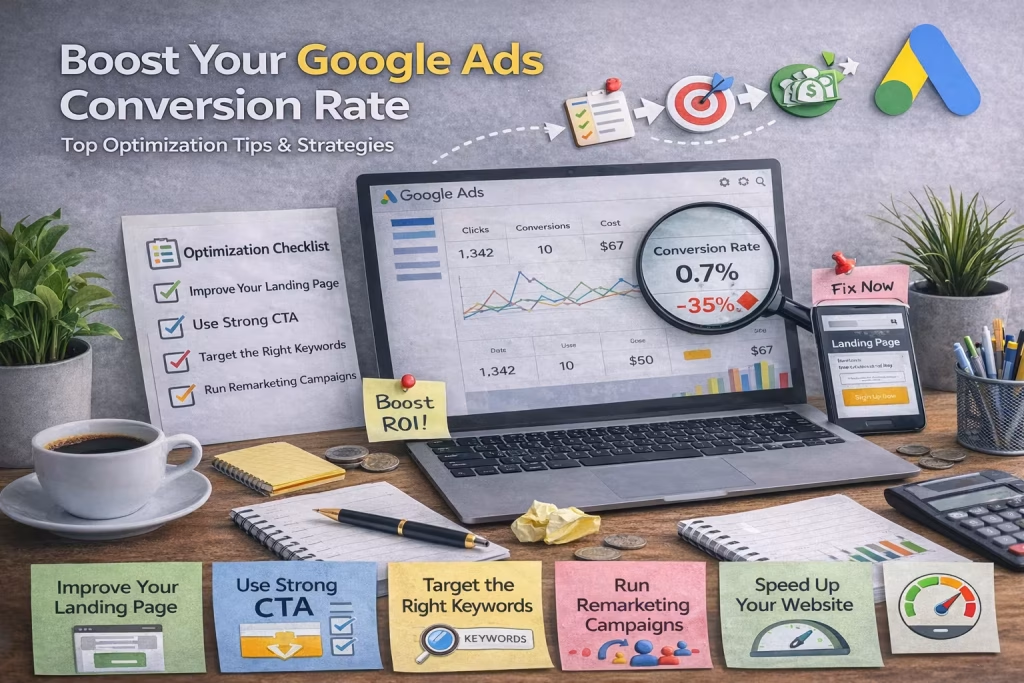
Increasing the conversion rate in Google Ads involves a combination of specialized techniques, such as optimizing ads, landing pages, budget management, and campaign settings. When every part of the user journey, from search to call to action, is aligned and clear, doubling the conversion rate in Google Ads is not impossible. Some ways to increase the conversion rate in Google Ads include:- Aligning the ad message with the landing page content
- Using clear, engaging, and relevant CTAs for each decision-making stage
- Optimizing and targeting keywords based on user intent
- Designing a fast, simple landing page focused on one goal
- Regular A/B testing and optimization of ads, landing pages, and CTAs
- Improving page load speed, especially on mobile devices
- Regularly reviewing and fixing Conversion Tracking
- Running effective remarketing campaigns
Turn Clicks into Sales with Google Ads
A low conversion rate in Google Ads typically indicates a weakness in one of the user journey stages—from keyword selection to ad messaging, landing page experience, and final offer. By analyzing data, optimizing campaigns, and aligning ads with audience needs, you can turn Google Ads clicks into real leads and sales. If you’re still wondering why you don’t get sales despite clicks in Google Ads, don’t worry. You can improve your conversion rate in Google Ads by contacting the HDM team at 021-88690818 for specialized advice.Frequently Asked Questions (FAQ)
- Why is my Google Ads conversion rate low? (Even with clicks)Not all clicks come from your target audience. Irrelevant keywords, low-quality clicks, poor landing pages, or a mismatch between the ad and the offer can cause users to click without taking further action.
- How can ad copy and CTA affect conversion rate?Ad copy and CTA create a specific expectation in the user's mind. If this expectation doesn't align with the landing page content or the CTA is vague, users get confused and don’t convert.
- What are the main landing page mistakes that lower conversion rates? Slow loading speed, cluttered design, long forms, lack of clear CTAs, and mismatched content with the ad are some of the most common mistakes that cause users to leave the page and lower conversion rates.
- How do incorrect keywords ruin the conversion rate? Incorrect keywords attract users who aren’t relevant or don’t have the intent to purchase. While they may