
Patients often turn to Google when they need a doctor, clinic, treatment, or medical service. Google Ads allows healthcare providers to appear in front of potential patients at the moment they are actively searching for care.
For healthcare clinics, medical practices, hospitals, and individual specialists, however, running an effective healthcare PPC campaign involves more than choosing a few keywords and launching an ad. Campaign structure, targeting, conversion tracking, landing pages, advertising policies, location, and budget can all affect whether advertising generates qualified patient enquiries.
In this guide, we explain how Google Ads works for healthcare providers, medical clinics, and other healthcare organisations. We also cover suitable campaign types, keyword selection, budgeting, common PPC mistakes, and the additional considerations involved in advertising healthcare services in the UAE.
Why Healthcare Providers Should Use Google Ads
Google Ads can help healthcare providers reach people who are already searching for a specific treatment, doctor, clinic, or medical service. Unlike broader awareness channels, paid search can connect a clinic with potential patients at the moment they are actively evaluating their options.
Healthcare providers can also control where ads appear, how much they spend, which services they promote, and which actions they measure as conversions. This makes Google Ads useful for campaigns focused on appointment bookings, calls, form submissions, and other measurable patient enquiries.
Reach Patients Searching for Health Services Now
Google Ads can appear when people search for services such as “dentist near me,” “dermatologist in Dubai,” or “physiotherapy clinic.” These searches often indicate that the user already has a specific need and is looking for a provider.
Targeting these high-intent searches can help clinics focus their advertising budget on users who are more likely to take the next step.
Build Visibility During the Patient Search Journey
Healthcare decisions often involve comparison. Patients may review several clinics, doctors, treatment options, locations, and reviews before booking.
Search advertising gives healthcare providers an opportunity to appear during this decision-making process and communicate important information such as services, location, availability, and booking options.
Control Budget, Location, and Timing
Google Ads allows healthcare providers to control daily budgets, geographic targeting, campaign schedules, devices, and individual services.
For example, a clinic can target only the locations it serves, increase visibility during opening hours, or create separate campaigns for different treatments. This level of control makes it easier to manage spending and evaluate campaign performance.
How Does Google Ads Work for Healthcare Providers?
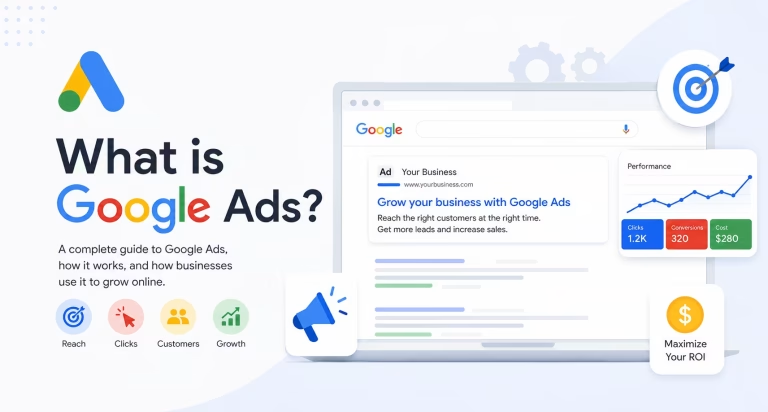
Google Ads allows healthcare providers to advertise their services across Google properties, particularly when potential patients search for relevant treatments, doctors, or clinics.
For healthcare campaigns, the process normally starts by identifying the services the clinic wants to promote, the locations it serves, and the actions that should count as conversions. Campaigns can then be structured around specific services and patient search behaviour.
Unlike many general advertising campaigns, healthcare PPC also requires additional attention to advertising policies, sensitive health-related content, privacy considerations, and local regulations.

How a Healthcare Google Ads Campaign Works
A healthcare Google Ads campaign normally follows a simple process:
- Step 1: Define the service or treatment you want to promote.
- Step 2: Identify the locations and patients you want to reach.
- Step 3: Create campaigns and ad groups around specific healthcare services.
- Step 4: Choose relevant search keywords and negative keywords.
- Step 5: Write clear ad copy that matches the user’s search intent.
- Step 6: Send visitors to a relevant landing page.
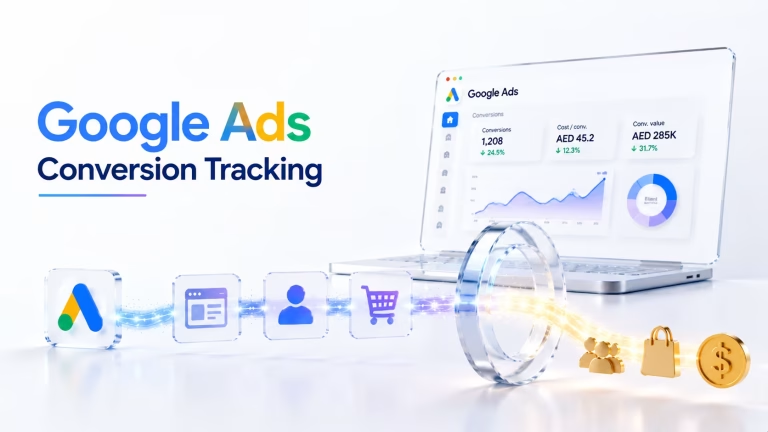
- Step 7: Track calls, appointment requests, forms, and other conversions.
- Step 8: Review search terms, cost per conversion, and lead quality regularly.
The objective is not simply to generate clicks. A healthcare PPC campaign should connect relevant patient searches with the right service and produce measurable enquiries or appointments.
Are Healthcare Ads Allowed on Google?
Many healthcare services can be advertised through Google Ads, but eligibility depends on the service, product, target country, and applicable advertising policies. Some healthcare and medicines categories are restricted, while others may require certification or prior approval.
A clinic advertising consultations, for example, may face different requirements from a pharmacy, telemedicine provider, addiction-treatment service, pharmaceutical advertiser, or provider promoting a regulated medical product. Healthcare advertisers should therefore review the requirements for their specific category and target location before creating a campaign.
Google’s Healthcare Advertising Policies and Local Regulations
Healthcare advertising is subject to additional rules because ads can involve medical treatments, health conditions, medicines, and other sensitive topics.
Google restricts or requires certification for certain healthcare-related products and services, and the rules can vary depending on the country and type of treatment being advertised. Healthcare providers should review the latest Google Ads healthcare policies before launching campaigns involving restricted or sensitive services.
Clinics should also consider the advertising and privacy regulations that apply in the country where the campaign will run. A campaign that is allowed in one market may require additional approvals or different messaging in another.
For healthcare providers operating in Dubai, platform policies are only part of the compliance picture. Social media and other promotional content may also need to comply with DHA requirements covering medical claims, patient consent, before-and-after content and professional responsibilities. For a closer look at the latest regulatory context, read our guide to DHA social media advertising rules in Dubai.
Best Types of Google Ads for Healthcare Services
There are different types of Google Ads you can use for promoting health services. Each type works best for a specific goal. Some ads help you get more patients fast. Others help people learn about your clinic over time. Choosing the right ad type depends on your goals, services, and budget. Let’s take a closer look at the best types of Google Ads for clinics and healthcare providers.

Google Search Ads for Clinics and Doctors
Search Ads appear when someone types keywords like “family doctor near me” or “dermatologist in [city].” These ads are text-based and show up on top of Google search results. They are perfect for getting direct bookings and fast responses from patients who are actively looking for care. You only pay when someone clicks.
Display Ads for Awareness Campaigns
Display Ads show your clinic’s image or banner on different websites. These ads don’t target people searching right now, but they help build awareness over time. You can show your brand, services, or even patient testimonials. It’s useful for new clinics or specialized services that need more visibility.
Local Service Ads for Nearby Practices
Local Services Ads are available only for eligible business categories and locations, and availability should not be assumed for every healthcare provider or UAE market. Where a medical or wellness category is eligible, these ads may help a nearby practice generate calls or enquiries directly from local search results.
Healthcare clinics should first check whether their service category and target location are currently supported. If Local Services Ads are unavailable, locally targeted Search campaigns, location assets, Google Business Profile optimisation, and service-specific landing pages may provide a more practical alternative.
Google Ads for Healthcare Clinics, Medical Practices, and Hospitals
Although the same Google Ads platform is used across the healthcare sector, campaign structure should reflect the type of provider, the services being promoted, and the way patients search for care.
A local healthcare clinic may focus on a small number of high-intent services within a limited geographic area. An individual doctor or medical practice may need campaigns built around specialties, consultations, and appointment availability. Hospitals and multi-location healthcare providers usually require a more detailed structure that separates departments, services, locations, languages, and conversion actions.
Google Ads campaigns may therefore need different strategies for:
- Healthcare clinics and medical centres
- Individual doctors and specialist practices
- Dental and dermatology clinics
- Physiotherapy and rehabilitation providers
- Aesthetic and elective-treatment clinics
- Hospitals and multi-location healthcare organisations
For each provider type, the campaign should connect a specific patient search with the most relevant service page or landing page. Keywords, ad messaging, geographic targeting, conversion tracking, and budget allocation should then be evaluated separately for each service or location.
How to Set Up a Google Ads Campaign for Healthcare Providers?
Running a Google Ads campaign for a healthcare business may sound complex, but it becomes easy when you break it down into steps. You need a clear goal, the right keywords, and the right target audience. From account setup to ad creation, each step helps your clinic reach real patients. Let’s go through the process in a simple and useful way.
Setting Goals and Defining Conversions (Calls, Form Submissions)
Before starting your campaign, know what you want to achieve. Do you want more calls? More appointment forms? More visits to your website? These are called conversions. Once you define them, Google can help you track and improve them.
Here’s how to set them:
- Step 1: Go to Google Ads dashboard
- Step 2: Click “Tools & Settings” > “Conversions.”
- Step 3: Choose a type: Call, Website Visit, Form Submission
- Step 4: Add the code to your site or phone button
- Step 5: Start tracking results
Choosing the Right Keywords & Negative Keywords
Keyword selection should reflect the healthcare service, patient need, location, and stage of the search journey. High-intent searches may combine a treatment or specialty with terms such as “clinic,” “doctor,” “appointment,” “near me,” or a specific location—for example, “dermatologist in Dubai” or “physiotherapy clinic in Sharjah.”
Healthcare advertisers should:
- Use Keyword Planner and actual search-term data to identify relevant demand.
- Separate keywords by service, treatment, specialty, and location.
- Create dedicated ad groups for services with different patient intent.
- Review search terms regularly and add irrelevant searches as negative keywords.
- Exclude searches related to jobs, training, free information, or unrelated conditions when they do not match the campaign objective.
- Test match types based on search-term quality and conversion data rather than assuming one match type is always more effective.
Negative keywords should also be reviewed carefully. A term such as “free” may be irrelevant for one clinic but valid for another campaign promoting an approved free consultation or screening. Exclusions should therefore be based on the clinic’s actual offer and lead-quality data.
Location & Device Targeting for Health Campaigns
Your clinic doesn’t need to advertise to everyone. You can show ads only in your city or to mobile users who are likely to call. Location and device targeting help you reach the right patient at the right place and time. This saves money and increases success.
You can improve these results by following tips from our guide on How to Optimize Your Website for Local Search Results and more. When your website and ads work together, you get better outcomes.

Healthcare Google Ads Examples and Messaging Principles
Effective healthcare ads usually match a specific patient search with a relevant service, location, and next step. The objective is not to use exaggerated promotional language, but to help the user understand whether the provider offers the care they are seeking.
Ad Copy for Healthcare Services
Healthcare ad copy can communicate practical information such as:
- The medical service or specialty available
- The clinic or service location
- Appointment or consultation availability
- Relevant practitioner qualifications
- Accepted booking or contact methods
- Language options where applicable
For example, a user searching for a dermatologist in Dubai should see messaging and a landing page related specifically to dermatology services in Dubai—not a generic advertisement for the entire medical centre.
Advertisers should avoid unsupported claims such as “best clinic,” “guaranteed results,” or promises about treatment outcomes. All messaging should comply with Google’s advertising policies and the healthcare advertising requirements applicable in the target market.
Landing Pages for Healthcare PPC Campaigns
A healthcare landing page should continue the message introduced in the ad. It should clearly explain the relevant service, identify the provider, communicate important patient information, and offer an appropriate conversion action.
Depending on the service, useful calls to action may include:
- “Request an Appointment”
- “Check Appointment Availability”
- “Contact the Clinic”
- “Speak With the Care Team”
- “Request More Information”
Claims, testimonials, offers, practitioner information, and before-and-after content should be reviewed for compliance before publication.
Campaigns for Different Medical Services
A dental clinic, physiotherapy practice, hospital, and aesthetic clinic should not use the same keywords, ad copy, or landing-page structure. Each service attracts different searches and may also be subject to different advertising restrictions.
Campaigns should therefore be separated by treatment or specialty when sufficient search demand exists. This makes it easier to match ads with patient intent, control budgets, assess lead quality, and measure cost per qualified enquiry for each service.
How Much Do Google Ads for Healthcare Services Cost?
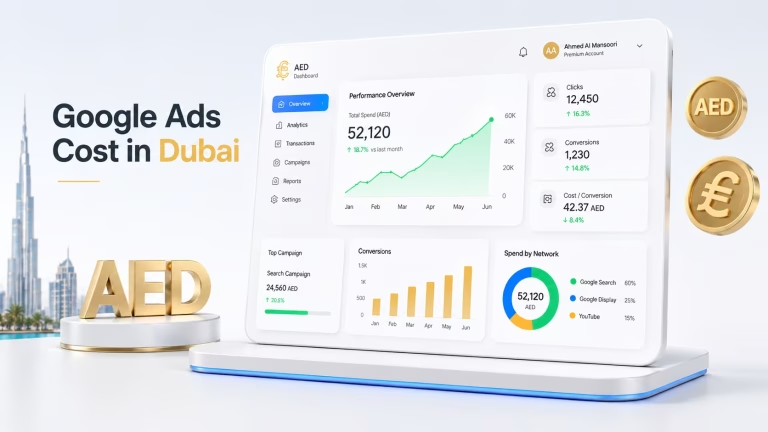
There is no universal cost for healthcare Google Ads. The required budget and average cost per click depend on the medical service, target location, competition, keyword intent, campaign structure, landing-page experience, and expected patient value.
Advertisers should avoid relying on global CPC benchmarks when planning a campaign in Dubai or another UAE market. Actual costs can differ substantially between services and locations, and Keyword Planner estimates should be validated against live campaign data.
What Affects Healthcare Google Ads CPC?
Healthcare advertising costs may be influenced by:
- Competition for the selected service and location
- The commercial intent of the search
- Keyword match type and search-term quality
- Ad relevance and expected click-through rate
- Landing-page relevance and experience
- Device, schedule, language, and geographic targeting
- Google Ads policy restrictions affecting the service
- The number of clinics competing for the same patients
Specialist or high-value treatments may attract more competitive searches, but a higher CPC does not automatically mean that a campaign will be profitable.
Budgeting for Healthcare PPC Campaigns
The appropriate budget should be based on available search demand and the number of qualified enquiries required—not on a universal daily minimum.
A clinic can begin with a controlled test focused on a limited number of services and locations. The initial data should then be used to evaluate search-term quality, conversion rate, cost per qualified enquiry, appointment rate, and lead quality before the campaign is expanded.
Measuring Return on Healthcare Advertising
Healthcare advertisers should look beyond clicks and form submissions. Campaign performance is more meaningful when online conversions can be connected with qualified enquiries, booked appointments, attended consultations, and—where appropriate and legally permitted—actual patient value.
Return on ad spend may not provide a complete picture if revenue data is unavailable or if patient value develops over time. In those cases, cost per qualified lead, cost per booked appointment, and lead-to-patient rate may provide more useful measures.
To learn more about improving paid-search efficiency, read our guide to reducing Google Ads CPC and generating more conversions.
Common Mistakes in Healthcare PPC Campaigns
Running a healthcare PPC campaign sounds easy, but many clinics make simple mistakes that cost them time and money. These mistakes can lead to ad disapproval, wasted clicks, or poor results. By avoiding these issues, you can get better performance and more patients from your ads. Let’s look at the most common problems in health-related ad campaigns.

Violating Google’s Medical Policies
Google has strict rules for healthcare ads. Many clinics try to advertise restricted services like prescription drugs or certain treatments without permission. These ads often get rejected or banned. To avoid this, always review Google’s medical advertising guidelines. Getting verified before advertising sensitive services is also a smart move.
Overusing Broad Match Keywords
Broad match can expand reach, but it may also trigger searches that do not match the clinic’s services or patient-acquisition goals. For example, a dental campaign could appear for searches related to jobs, courses, equipment, or general information rather than appointment intent.
This does not mean broad match should always be avoided. Its suitability depends on conversion tracking, bidding strategy, budget, search volume, and the advertiser’s ability to review search terms. Healthcare advertisers should test match types carefully, monitor lead quality, and maintain negative-keyword lists based on actual irrelevant searches.
Poor Landing Page Experience
Even if your ad is great, a weak landing page can lose the visitor. Pages that load slowly, have too much text, or are not mobile-friendly will reduce trust. Users may leave quickly without booking. Also, not having clear CTAs or visible contact info can be a big issue.
Healthcare landing pages should be fast, mobile-friendly, easy to navigate, and focused on the service advertised. Important information such as the clinic’s location, practitioner details, appointment options, contact methods, and applicable patient information should be easy to find. The page should also use compliant claims and provide a clear next step without creating unnecessary friction.
Scaling and Optimizing Your Healthcare Google Ads Campaigns
Once a healthcare PPC campaign begins generating conversions, optimization becomes more important than simply increasing the budget. Clinics should evaluate which keywords, services, locations, devices, and landing pages produce the most valuable patient enquiries.
Scaling should focus on increasing qualified conversions without allowing cost per acquisition or lead quality to deteriorate. This normally requires regular testing, search-term analysis, conversion tracking, and budget reallocation.
A/B Testing Landing Pages and Headlines
A/B testing is when you compare two versions of a page or ad to see which performs better. For example, try two different headlines: “Book a Free Health Check” vs. “See a Doctor Today.” Then compare the results. A small change can bring big improvements. You can also test CTA buttons, images, or forms.
Retargeting and Custom Audiences
Not all users book right away. Retargeting shows ads to people who have already visited your site. It reminds them to come back and complete the action. Custom audiences help you reach similar people who are likely to need your services. These tools are powerful for staying in the minds of patients.
Using Performance Max Campaigns in Healthcare
Performance Max can distribute ads across several Google properties, including Search, Display, YouTube, Discover, Gmail, and Maps. Whether it is suitable for a healthcare provider depends on the campaign objective, conversion data, available creative assets, service restrictions, and the advertiser’s ability to evaluate lead quality.
It should not be treated as an automatic replacement for carefully structured Search campaigns. Healthcare providers should use clearly defined conversion actions, appropriate audience signals, compliant assets, and reliable offline or lead-quality feedback where possible. Performance Max should then be evaluated against Search and other campaign types based on qualified enquiries—not only the number of reported conversions.
Running Google Ads for Healthcare Services in the UAE
Healthcare Google Ads campaigns in the UAE require additional consideration because clinics may need to account for local advertising requirements, multilingual audiences, different service areas, and the way patients search across individual emirates.
A campaign targeting patients in Dubai, for example, may require a different keyword strategy, geographic setup, and landing-page experience from a campaign targeting Abu Dhabi, Sharjah, or several emirates at the same time.
Before launching healthcare campaigns in the UAE, clinics should evaluate both Google’s advertising requirements and the local rules that apply to the healthcare services being promoted.

Regulatory Checks Before Launching Healthcare Ads in the UAE
Healthcare providers should confirm which advertising requirements apply to their clinic, medical service, treatment, and campaign before publishing ads.
Some healthcare categories may require additional approval or may be subject to restrictions on promotional language, claims, imagery, treatments, or other advertising elements.
Because requirements can differ depending on the healthcare service and jurisdiction, advertisers should verify current regulatory requirements before launching or updating campaigns rather than relying on a single set of rules for every healthcare category.
English and Arabic Healthcare PPC Campaigns
Healthcare providers in the UAE often need to reach audiences searching in both English and Arabic.
Instead of simply translating one campaign into another language, clinics should evaluate search terms, ad copy, landing-page content, and conversion performance separately for each audience.
Separate campaign structures can also make it easier to compare:
- Search demand
- Cost per click
- Conversion rate
- Cost per patient enquiry
- Lead quality
- Performance by location and language
The best language strategy depends on the clinic’s services, location, target audience, and actual campaign data.
Location and Service-Based Campaign Structure in the UAE
Healthcare searches are often highly local. Someone looking for a dentist, dermatologist, physiotherapist, or specialist may prefer a provider within a specific area rather than anywhere in the UAE.
Clinics should therefore consider separating campaigns by location and service when sufficient search demand exists.
For example, a healthcare provider offering several treatments could create different campaigns for:
- Dental services
- Dermatology
- Physiotherapy
- Aesthetic treatments
- Specialist consultations
Each campaign can then use its own keywords, ad messaging, landing page, geographic targeting, budget, and conversion data.
For healthcare providers that need a broader acquisition strategy beyond individual Google Ads campaigns, explore HDM’s healthcare marketing services in Dubai and the UAE.
When Should a Healthcare Provider Get Professional PPC Support?
Some clinics can manage a small Google Ads campaign internally, particularly when they promote only a few services in a limited geographic area.
Professional campaign management becomes more useful when a healthcare provider needs to manage multiple treatments, locations, languages, landing pages, conversion actions, or larger advertising budgets.
It can also help when campaigns are generating traffic but struggling with high acquisition costs, poor lead quality, limited conversion tracking, or difficulty scaling results.
Google Ads should ultimately be evaluated as part of the wider patient acquisition journey rather than only by clicks or impressions.
If your clinic or healthcare business needs support across Google Ads and other patient acquisition channels, explore HDM’s healthcare marketing services in Dubai and the UAE.
FAQ: Frequently Asked Questions
- Can small clinics use Google Ads with a limited budget?
- Yes. A smaller clinic can begin with a controlled budget and focus on a limited number of high-intent services and locations. The important factor is whether the campaign generates qualified enquiries at an acceptable cost, rather than the size of the budget alone.
- How quickly can healthcare Google Ads generate results?
- Google Ads can begin generating impressions and clicks shortly after a campaign is approved and launched. However, evaluating performance usually requires enough conversion data to understand which keywords, ads, services, and locations are producing valuable patient enquiries.
- Does a healthcare Google Ads campaign need a dedicated landing page?
- A dedicated landing page is often useful when the campaign promotes a specific service or treatment. The page can closely match the user’s search, explain the relevant service, and focus attention on one conversion action such as calling the clinic or requesting an appointment.
- Can healthcare providers advertise medical services in the UAE?
- Many healthcare services can be advertised, but the requirements depend on the type of service, the advertising content, and the applicable UAE regulations. Healthcare providers should verify current Google policies and relevant local requirements before launching campaigns.
- What should healthcare providers measure in Google Ads?
- Clicks and impressions alone are not enough. Clinics should also track meaningful conversions such as phone calls, appointment requests, submitted forms, booked consultations, and other qualified patient enquiries. Where possible, campaigns should also be evaluated based on cost per qualified lead and the quality of the enquiries generated.
- What is the difference between healthcare SEO and Google Ads?
- Google Ads can generate visibility while a campaign is actively running, while SEO focuses on building organic search visibility over a longer period. Many healthcare providers use both channels for different stages of patient acquisition rather than treating them as direct alternatives.