
If you’ve ever scrolled through Facebook or Instagram and noticed a sponsored post that looked surprisingly relevant to your interests, you’ve already seen Meta Ads in action. A real estate company promoting high-end properties, an e-commerce brand showcasing its latest collection, or a healthcare provider offering specialized consultations may all appear directly within a user’s digital workspace. Unlike traditional broadcasting, these businesses aren’t simply shouting into the void. They are deploying precise paid acquisition frameworks to reach highly defined audiences based on intricate interest layers, real-time behaviors, historical demographics, and cross-platform activity.
This capability to deliver hyper-targeted asset distribution is exactly why the platform has transformed into the backbone of modern social acquisition. However, despite its widespread adoption, a massive gap remains in how business owners interpret its core engine. Some mistake it merely for basic Facebook placements, while others treat it as a glorified tool for boosting organic posts. Both assumptions severely understate its scalability. Understanding the technical architecture of Meta Ads is the foundational step toward determining how it should integrate into your growth ecosystem, serving as a critical discovery pillar within your broader PPC advertising strategy.
Understanding the Meta Ads Architecture
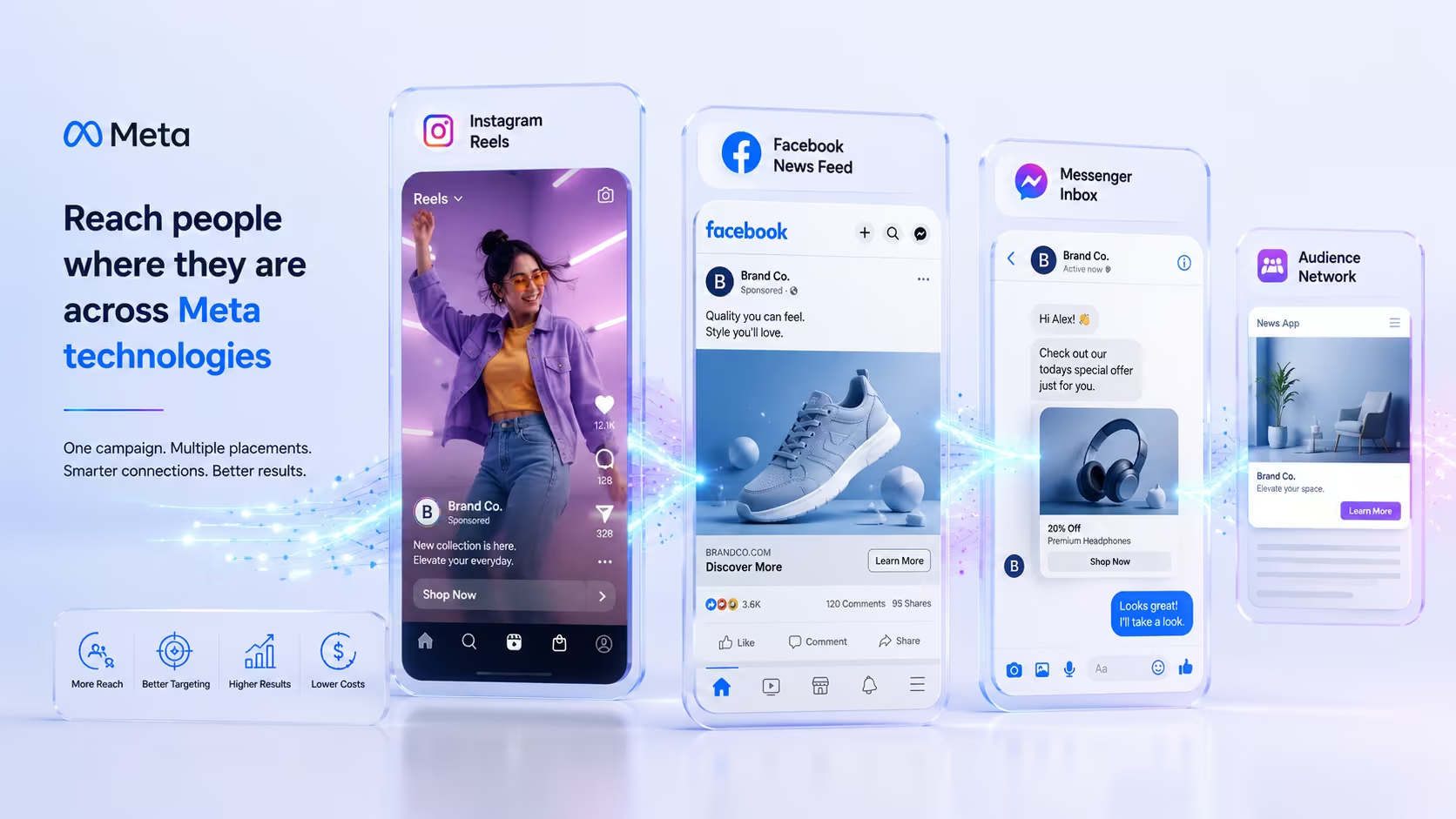
Meta Ads is the enterprise-grade advertising ecosystem owned by Meta, governing monetization channels across Facebook, Instagram, Messenger, and the Meta Audience Network. Through a unified programmatic interface—Meta Ads Manager—businesses can orchestrate multi-platform campaigns targeting distinct user states across varying environments.
The definitive line separating Meta Ads from search environments like Google Ads boils down to one fundamental marketing mechanic: Intent versus Discovery. When a user executes a search query for an immediate solution, they are displaying explicit transactional intent. Conversely, a user navigating Instagram is in a passive consumption state. They are not actively looking to buy; instead, Meta analyzes thousands of behavioral signals to display relevant offers that trigger spontaneous demand. Rather than merely capturing existing market volume, a sophisticated strategy utilizes Meta Ads to proactively engineer demand, seed brand equity, and capture high-converting customers before they ever visit a search box.
🔗 Analyze the acquisition economics: Explore the precise budget dynamics and bidding frameworks we mapped out in our strategic guide on the actual meta ads cost in dubai.
The Engine: Machine Learning and Advantage + Automation
Modern paid acquisition on Meta has evolved far beyond manual audience guessing. Today, the entire system is governed by complex machine learning algorithms and advanced automation. To scale campaigns effectively, brands must move past hyper-fragmented manual targeting and leverage Meta’s core automated infrastructure.

- The Meta Pixel & Conversions API (CAPI): The foundational data pipeline. By tracking server-side and browser-side web actions, CAPI feeds deep behavioral intent data back into the algorithm, allowing it to mathematically identify which users are most likely to convert.
- Advantage+ Campaign Shopping (A+C): Meta’s end-to-end AI automation tool for e-commerce. A+C consolidates targeting, budgeting, and creative variations into a single stream, dynamically distributing ad variations to the highest-performing cohorts without manual intervention.
- Broad Targeting & Lookalike Audiences: Instead of boxing campaigns into tight, expensive interest groups, smart deployment relies on broad demographic constraints, letting the machine learning algorithm locate ideal buyer personas based on visual creative resonance.
Where Your Creative Assets Liquidate: Main Placements
A major misconception is treating Meta Ads as a singular channel. In practice, the network distributes your creative across distinct native experiences, each requiring bespoke content formats.
1. Instagram Ecosystem
The absolute gold standard for highly visual, narrative-driven commerce. Campaigns operate within Instagram Feeds, Explore Pages, and critically, Instagram Reels, where immersive vertical video capture drives unparalleled engagement and rapid customer acquisition among modern consumer segments.
2. Facebook Placements
A powerhouse for rich media distribution and long-form copy tests. It spans core News Feeds, Marketplace environments, Video Feeds, and Right Column native banners, capturing diverse user profiles across multi-device touchpoints.
3. Messenger Network
A conversational gateway tailored for direct-response lead generation. Ads appear directly in the primary inbox or flow seamlessly into automated chat funnels, initiating real-time dialogues that bridge the gap between initial discovery and qualification.
4. Meta Audience Network
Extends your contextual reach beyond native social interfaces, serving interstitial video assets, rewarded native blocks, and display banners across millions of high-traffic mobile applications and external publisher websites.
Strategic Funnel Alignment: Common Objectives
Before launching a campaign, advertisers must declare a specific optimization objective. This selection signals the algorithm exactly how to filter target cohorts and optimize bidding structures.
Core Performance Objectives Matrix
- Awareness: Optimizes for absolute volume, reach, and ad recall lift. Perfect for brand positioning or retail product launches.
- Traffic: Funnels maximum click volume to external destinations. Best reserved for informational content or long-form resource distribution.
- Leads: Captures critical user telemetry via native Instant Forms or custom web routing. The baseline mechanism for high-ticket service industries.
- Sales: The ultimate bottom-of-funnel conversion driver. Meta isolates users with high purchase probabilities, maximizing catalog checkout events and return on ad spend (ROAS).
Meta Ads vs Google Ads: Complementary Pillars
While often viewed as rivals, top-tier performance frameworks deploy these platforms as complementary partners within an omnichannel acquisition model. Google captures explicit demand at the bottom of the funnel; Meta fuels top-of-funnel volume by injecting your value proposition directly into relevant lifestyle matrices. A user discovers a problem through a highly creative Instagram Reels campaign, interacts with the brand, and later searches for that exact brand name on Google to close the loop.
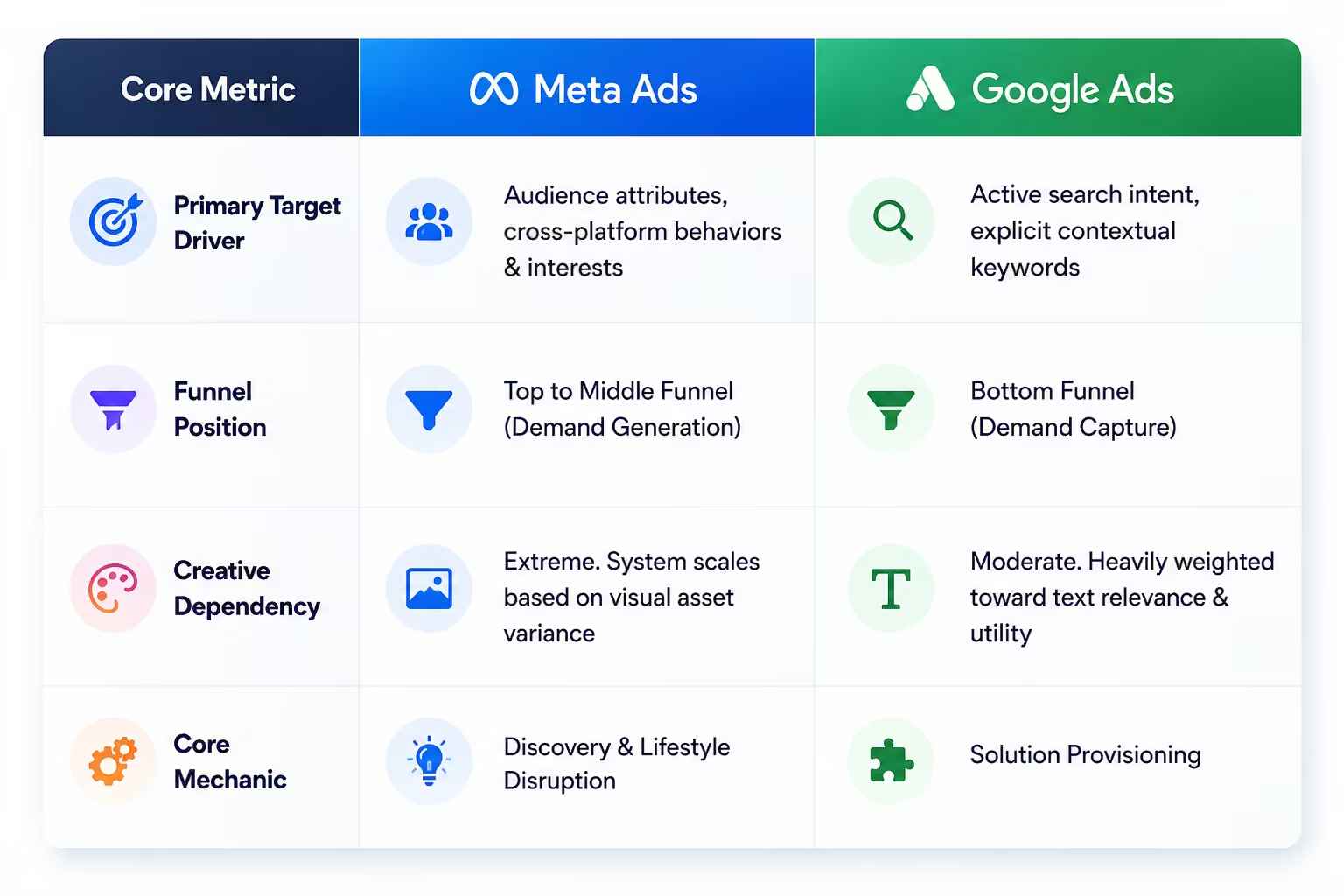
The core differences are structured below:
| Core Metric | Meta Ads | Google Ads |
| Primary Target Driver | Audience attributes, cross-platform behaviors & interests | Active search intent, explicit contextual keywords |
| Funnel Position | Top to Middle Funnel (Demand Generation) | Bottom Funnel (Demand Capture) |
| Creative Dependency | Extreme. System scales based on visual asset variance | Moderate. Heavily weighted toward text relevance & utility |
| Core Mechanic | Discovery & Lifestyle Disruption | Solution Provisioning |
Is Meta Ads Fit for Your Growth Model?
While Meta Ads boasts unmatched scale, its performance is highly dependent on creative capability, structural profit margins, and landing page engineering. It functions as an explosive multiplier for lifestyle e-commerce, high-end real estate, niche professional training, local service footprints, and scalable SaaS platforms where a visual narrative can disrupt the user’s scroll.

However, running a sustainable paid acquisition system requires moving past surface-level mechanics. Profitable campaigns require intense asset testing, continuous budget orchestration (CBO vs ABO), data tracking validation, and conversion rate optimization (CRO). The platform itself is not a generic shortcut to growth; it is an amplification lens. If your landing pages are unoptimized or your offer lacks product-market fit, paid traffic will simply accelerate your losses. To navigate these platform shifts and build a bulletproof funnel, collaborating with a dedicated digital marketing agency ensures your paid infrastructure transforms into a predictable revenue driver rather than an expensive testing experiment.
To scale your spend efficiently without cross-platform guesswork, partnering with an experienced digital agency allows you to hand over technical implementation—from pixel deployment to custom creative generation—and focus entirely on operational execution. To explore how this engine can specifically scale your customer pipeline, explore our full suite of Meta Ads Management Services to audit your existing path and reveal hidden growth leaks.